.jpg)
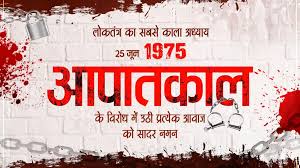


Emergency, JP Movement, and Media's Role Now Part of Class 9 Curriculum; NCERT Includes Topics in Textbook
New Delhi: Students in Class 9 will now learn about the 'Emergency'—one of the most significant and controversial chapters in the history of Indian democracy. NCERT has accorded prominence to the Emergency in its new social science textbook, 'Understanding Society: India and Beyond'.
Previously, this topic was primarily part of the Political Science curriculum for Classes 11 and 12. The new textbook will provide students with detailed information regarding the impact of the Emergency on fundamental rights, the movement led by Jayaprakash Narayan, and the role of the media in a democracy.
These changes have been implemented in accordance with the National Education Policy (NEP) and the National Curriculum Framework (NCF). Additionally, the new textbook places greater emphasis on Indian civilization, cultural heritage, and the Indian knowledge tradition.
On the other hand, traditional chapters such as the French Revolution, the Russian Revolution, Nazism, and Colonialism have been excluded from the book.
The primary objective of the new textbook is not merely to teach facts to students but to foster a practical understanding of society, history, geography, and democracy. Education experts believe this will help students relate their studies to real-life situations.
These changes are viewed as part of NCERT's ongoing efforts.
New Delhi: Students in Class 9 will now learn about the 'Emergency'—one of the most significant and controversial chapters in the history of Indian democracy. NCERT has accorded prominence to the Emergency in its new social science textbook, 'Understanding Society: India and Beyond'.
Previously, this topic was primarily part of the Political Science curriculum for Classes 11 and 12. The new textbook will provide students with detailed information regarding the impact of the Emergency on fundamental rights, the movement led by Jayaprakash Narayan, and the role of the media in a democracy.
These changes have been implemented in accordance with the National Education Policy (NEP) and the National Curriculum Framework (NCF). Additionally, the new textbook places greater emphasis on Indian civilization, cultural heritage, and the Indian knowledge tradition.
On the other hand, traditional chapters such as the French Revolution, the Russian Revolution, Nazism, and Colonialism have been excluded from the book.
The primary objective of the new textbook is not merely to teach facts to students but to foster a practical understanding of society, history, geography, and democracy. Education experts believe this will help students relate their studies to real-life situations.
These changes are viewed as part of NCERT's ongoing efforts.
Previously, this topic was primarily part of the Political Science curriculum for Classes 11 and 12. The new textbook will provide students with detailed information regarding the impact of the Emergency on fundamental rights, the movement led by Jayaprakash Narayan, and the role of the media in a democracy.
These changes have been implemented in accordance with the National Education Policy (NEP) and the National Curriculum Framework (NCF). Additionally, the new textbook places greater emphasis on Indian civilization, cultural heritage, and the Indian knowledge tradition.
On the other hand, traditional chapters such as the French Revolution, the Russian Revolution, Nazism, and Colonialism have been excluded from the book.
The primary objective of the new textbook is not merely to teach facts to students but to foster a practical understanding of society, history, geography, and democracy. Education experts believe this will help students relate their studies to real-life situations.
These changes are viewed as part of NCERT's ongoing efforts.