.jpg)
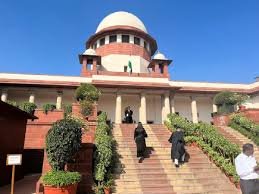


Hindu Society Will Be Divided, Religion Harmed If Entry to Temples and Monasteries Is Barred on Grounds of Caste or Sect: Supreme Court
New Delhi: The Supreme Court has clarified that granting or denying entry to temples and monasteries on the basis of sect, denomination, or caste would be detrimental to the Hindu religion and would lead to the division of society.
This significant observation was made during the hearing of the Sabarimala temple case before a nine-judge bench. While responding to arguments presented by Senior Advocate C.S. Vaidyanathan, the bench—led by Chief Justice Surya Kant—stated: “Allowing a specific sect to grant entry to a temple only to its own members while barring others is not beneficial for the Hindu religion. This will cause harm to the religion and result in the fragmentation of society.”
Vaidyanathan had argued that the devotees of Sabarimala Ayyappa constitute a distinct religious denomination, thereby granting them the right to manage the temple's affairs. He contended that Article 26(b) of the Constitution takes precedence over Article 25(2)(b). Article 26(b) grants religious denominations the right to manage their own affairs, whereas Article 25(2)(b) pertains to ensuring access for all individuals to all Hindu religious institutions.
However, the Court expressed concern over this stance, observing that such sect-based restrictions would fracture the unity of the Hindu religion. “All temples and monasteries should be open to all Hindus; excluding any particular class is harmful to both the religion and society,” the bench opined.
This matter arose in the wake of the 2018 verdict regarding women's entry into the Sabarimala temple. At that time, a five-judge bench had ruled in favor of allowing women between the ages of 10 and 50 to enter the temple. Subsequently, as the issue involved broader questions concerning religious freedom, it was referred to a nine-judge bench. This observation by the Supreme Court could prove significant regarding the balance between traditions and equality in Hindu temples. The bench comprises Chief Justice Surya Kant, along with Justices B.V. Nagarathna, M.M. Sundresh, and others.
New Delhi: The Supreme Court has clarified that granting or denying entry to temples and monasteries on the basis of sect, denomination, or caste would be detrimental to the Hindu religion and would lead to the division of society.
This significant observation was made during the hearing of the Sabarimala temple case before a nine-judge bench. While responding to arguments presented by Senior Advocate C.S. Vaidyanathan, the bench—led by Chief Justice Surya Kant—stated: “Allowing a specific sect to grant entry to a temple only to its own members while barring others is not beneficial for the Hindu religion. This will cause harm to the religion and result in the fragmentation of society.”
Vaidyanathan had argued that the devotees of Sabarimala Ayyappa constitute a distinct religious denomination, thereby granting them the right to manage the temple's affairs. He contended that Article 26(b) of the Constitution takes precedence over Article 25(2)(b). Article 26(b) grants religious denominations the right to manage their own affairs, whereas Article 25(2)(b) pertains to ensuring access for all individuals to all Hindu religious institutions.
However, the Court expressed concern over this stance, observing that such sect-based restrictions would fracture the unity of the Hindu religion. “All temples and monasteries should be open to all Hindus; excluding any particular class is harmful to both the religion and society,” the bench opined.
This matter arose in the wake of the 2018 verdict regarding women's entry into the Sabarimala temple. At that time, a five-judge bench had ruled in favor of allowing women between the ages of 10 and 50 to enter the temple. Subsequently, as the issue involved broader questions concerning religious freedom, it was referred to a nine-judge bench. This observation by the Supreme Court could prove significant regarding the balance between traditions and equality in Hindu temples. The bench comprises Chief Justice Surya Kant, along with Justices B.V. Nagarathna, M.M. Sundresh, and others.
This significant observation was made during the hearing of the Sabarimala temple case before a nine-judge bench. While responding to arguments presented by Senior Advocate C.S. Vaidyanathan, the bench—led by Chief Justice Surya Kant—stated: “Allowing a specific sect to grant entry to a temple only to its own members while barring others is not beneficial for the Hindu religion. This will cause harm to the religion and result in the fragmentation of society.”
Vaidyanathan had argued that the devotees of Sabarimala Ayyappa constitute a distinct religious denomination, thereby granting them the right to manage the temple's affairs. He contended that Article 26(b) of the Constitution takes precedence over Article 25(2)(b). Article 26(b) grants religious denominations the right to manage their own affairs, whereas Article 25(2)(b) pertains to ensuring access for all individuals to all Hindu religious institutions.
However, the Court expressed concern over this stance, observing that such sect-based restrictions would fracture the unity of the Hindu religion. “All temples and monasteries should be open to all Hindus; excluding any particular class is harmful to both the religion and society,” the bench opined.
This matter arose in the wake of the 2018 verdict regarding women's entry into the Sabarimala temple. At that time, a five-judge bench had ruled in favor of allowing women between the ages of 10 and 50 to enter the temple. Subsequently, as the issue involved broader questions concerning religious freedom, it was referred to a nine-judge bench. This observation by the Supreme Court could prove significant regarding the balance between traditions and equality in Hindu temples. The bench comprises Chief Justice Surya Kant, along with Justices B.V. Nagarathna, M.M. Sundresh, and others.