.jpg)


Maharashtra Leads in Digital Mineral Management; - GPS Mandatory for Mineral-Transporting Vehicles
Nagpur, 11th: Maharashtra has taken a significant leap in mineral management through the new 'ILMS 2.0' digital system, thereby strengthening transparency and control. This system has digitized all mining-related processes in the state, marking a crucial milestone in e-governance. It has enabled effective control over the entire chain of mineral excavation, transportation, and storage, effectively curbing illegal transactions.
With the aim of ensuring transparent management of mines and minerals, Chief Minister Devendra Fadnavis and the Minister for Mines and Geology, Shambhuraj Desai, had instructed the department to adopt a state-of-the-art digital management system. Consequently, this new digital system has now been implemented.
Until a few years ago, simple passes were used for mineral transportation. Since information was entered manually, there was scope for errors and irregularities regarding mineral records, quantities, or transactions. However, the process has undergone phased improvements over the last few years.
Features of the New System
The 'ILMS 2.0' system has now made the entire mechanism more robust. This new system digitally records the entire supply chain—from the moment minerals leave the mine to their final sale and usage. While data on mineral purchase, sale, and production was already captured, the 2.0 version ensures that subsequent processes are also strictly monitored and controlled.
GPS Mandatory for Mineral-Transporting Vehicles
GPS installation has been made mandatory for every vehicle transporting minerals, and a specific route is designated for each trip. An immediate alert is generated if the vehicle deviates from the route or exhibits suspicious movement. Once the minerals are unloaded, an online acknowledgment is sent to the mobile phone. Only registered individuals can purchase minerals, and the truck's entire journey can be tracked and verified. **Inclusion of Coal**
This system already covers major minerals such as iron ore, manganese, bauxite, and limestone. Previously, coal was not included in this arrangement; however, with the assistance of WCL (Western Coalfields Limited), coal has now been incorporated. Approximately 65 percent of coal washeries, traders, and power plants have been linked to this system. Consequently, it is expected that coal theft will be significantly curbed. Additionally, records of transactions involving WCL will be available to the department.
**Monitoring Mechanism**
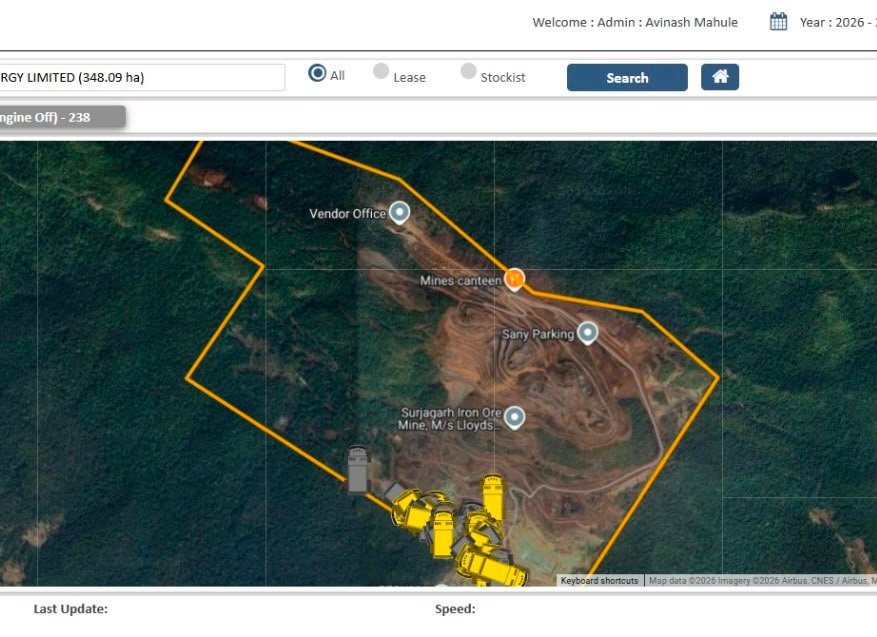
The system enables monitoring to ensure that mineral sales in the open market are conducted properly. Maps have been created for each mine through geo-fencing based on satellite imagery. It is impossible to generate a transit pass outside the designated mining area. Buyers have also been brought within the geo-fencing framework. The system issues an immediate alert if a vehicle enters or exits the mining area unnecessarily or exhibits suspicious movement. There is a future proposal to integrate this system with highway toll plazas to implement 'passive tracking.'
This new system was developed under the guidance of Additional Chief Secretary Lokesh Chandra and Dr. T.R.K. Rao, Director General of the Directorate of Geology and Mining. The project was executed by Deputy Director Suresh Naitam, Senior Geologist Dr. Shirish Naik, and Avinash Mahule (Project Manager, GNFC Limited) along with their team. Work is also underway to link this system with the GST department to verify mineral quantities and prices, thereby minimizing the risk of revenue loss. Overall, ‘ILMS 2.0’ will ensure effective control over the entire process of mineral excavation, transportation, and storage, thereby significantly curbing illegal transactions. Through this initiative, Maharashtra has set a new benchmark for digital and e-governance-based mineral administration.
Nagpur, 11th: Maharashtra has taken a significant leap in mineral management through the new 'ILMS 2.0' digital system, thereby strengthening transparency and control. This system has digitized all mining-related processes in the state, marking a crucial milestone in e-governance. It has enabled effective control over the entire chain of mineral excavation, transportation, and storage, effectively curbing illegal transactions.
With the aim of ensuring transparent management of mines and minerals, Chief Minister Devendra Fadnavis and the Minister for Mines and Geology, Shambhuraj Desai, had instructed the department to adopt a state-of-the-art digital management system. Consequently, this new digital system has now been implemented.
Until a few years ago, simple passes were used for mineral transportation. Since information was entered manually, there was scope for errors and irregularities regarding mineral records, quantities, or transactions. However, the process has undergone phased improvements over the last few years.
Features of the New System
The 'ILMS 2.0' system has now made the entire mechanism more robust. This new system digitally records the entire supply chain—from the moment minerals leave the mine to their final sale and usage. While data on mineral purchase, sale, and production was already captured, the 2.0 version ensures that subsequent processes are also strictly monitored and controlled.
GPS Mandatory for Mineral-Transporting Vehicles
GPS installation has been made mandatory for every vehicle transporting minerals, and a specific route is designated for each trip. An immediate alert is generated if the vehicle deviates from the route or exhibits suspicious movement. Once the minerals are unloaded, an online acknowledgment is sent to the mobile phone. Only registered individuals can purchase minerals, and the truck's entire journey can be tracked and verified. **Inclusion of Coal**
This system already covers major minerals such as iron ore, manganese, bauxite, and limestone. Previously, coal was not included in this arrangement; however, with the assistance of WCL (Western Coalfields Limited), coal has now been incorporated. Approximately 65 percent of coal washeries, traders, and power plants have been linked to this system. Consequently, it is expected that coal theft will be significantly curbed. Additionally, records of transactions involving WCL will be available to the department.
**Monitoring Mechanism**
The system enables monitoring to ensure that mineral sales in the open market are conducted properly. Maps have been created for each mine through geo-fencing based on satellite imagery. It is impossible to generate a transit pass outside the designated mining area. Buyers have also been brought within the geo-fencing framework. The system issues an immediate alert if a vehicle enters or exits the mining area unnecessarily or exhibits suspicious movement. There is a future proposal to integrate this system with highway toll plazas to implement 'passive tracking.'
This new system was developed under the guidance of Additional Chief Secretary Lokesh Chandra and Dr. T.R.K. Rao, Director General of the Directorate of Geology and Mining. The project was executed by Deputy Director Suresh Naitam, Senior Geologist Dr. Shirish Naik, and Avinash Mahule (Project Manager, GNFC Limited) along with their team. Work is also underway to link this system with the GST department to verify mineral quantities and prices, thereby minimizing the risk of revenue loss. Overall, ‘ILMS 2.0’ will ensure effective control over the entire process of mineral excavation, transportation, and storage, thereby significantly curbing illegal transactions. Through this initiative, Maharashtra has set a new benchmark for digital and e-governance-based mineral administration.
With the aim of ensuring transparent management of mines and minerals, Chief Minister Devendra Fadnavis and the Minister for Mines and Geology, Shambhuraj Desai, had instructed the department to adopt a state-of-the-art digital management system. Consequently, this new digital system has now been implemented.
Until a few years ago, simple passes were used for mineral transportation. Since information was entered manually, there was scope for errors and irregularities regarding mineral records, quantities, or transactions. However, the process has undergone phased improvements over the last few years.
Features of the New System
The 'ILMS 2.0' system has now made the entire mechanism more robust. This new system digitally records the entire supply chain—from the moment minerals leave the mine to their final sale and usage. While data on mineral purchase, sale, and production was already captured, the 2.0 version ensures that subsequent processes are also strictly monitored and controlled.
GPS Mandatory for Mineral-Transporting Vehicles
GPS installation has been made mandatory for every vehicle transporting minerals, and a specific route is designated for each trip. An immediate alert is generated if the vehicle deviates from the route or exhibits suspicious movement. Once the minerals are unloaded, an online acknowledgment is sent to the mobile phone. Only registered individuals can purchase minerals, and the truck's entire journey can be tracked and verified. **Inclusion of Coal**
This system already covers major minerals such as iron ore, manganese, bauxite, and limestone. Previously, coal was not included in this arrangement; however, with the assistance of WCL (Western Coalfields Limited), coal has now been incorporated. Approximately 65 percent of coal washeries, traders, and power plants have been linked to this system. Consequently, it is expected that coal theft will be significantly curbed. Additionally, records of transactions involving WCL will be available to the department.
**Monitoring Mechanism**
The system enables monitoring to ensure that mineral sales in the open market are conducted properly. Maps have been created for each mine through geo-fencing based on satellite imagery. It is impossible to generate a transit pass outside the designated mining area. Buyers have also been brought within the geo-fencing framework. The system issues an immediate alert if a vehicle enters or exits the mining area unnecessarily or exhibits suspicious movement. There is a future proposal to integrate this system with highway toll plazas to implement 'passive tracking.'
This new system was developed under the guidance of Additional Chief Secretary Lokesh Chandra and Dr. T.R.K. Rao, Director General of the Directorate of Geology and Mining. The project was executed by Deputy Director Suresh Naitam, Senior Geologist Dr. Shirish Naik, and Avinash Mahule (Project Manager, GNFC Limited) along with their team. Work is also underway to link this system with the GST department to verify mineral quantities and prices, thereby minimizing the risk of revenue loss. Overall, ‘ILMS 2.0’ will ensure effective control over the entire process of mineral excavation, transportation, and storage, thereby significantly curbing illegal transactions. Through this initiative, Maharashtra has set a new benchmark for digital and e-governance-based mineral administration.