.jpg)


Modi Government's Ban on Telegram and the Test of the IT Act; Case Filed in Delhi High Court
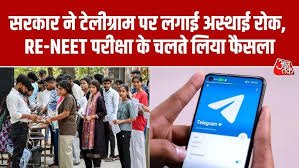
New Delhi: Messaging platform Telegram has challenged the Central Government's temporary ban order in the Delhi High Court. This ban was imposed against the backdrop of the NEET-UG 2026 re-examination. The government stated that the decision was taken to curb exam-related malpractices and the circulation of fake paper leaks.
The Central Government banned Telegram's services until June 22, 2026, under Section 69A of the Information Technology Act, 2000. This order was based on the recommendation of the National Testing Agency (NTA). According to the NTA, certain groups had begun using Telegram to mislead students, sell fake question papers, and spread misinformation regarding the exam.
Telegram's Stance
Telegram has argued in court that:
Banning the entire platform causes significant inconvenience to millions of legitimate users.
Action should be taken only against those violating the rules, rather than penalizing the entire platform.
The validity, necessity, and proportionality of the ban should be subject to judicial scrutiny.
Imposing a complete ban is inappropriate when less drastic alternatives are available.
Telegram founder Pavel Durov also stated that while ordinary users have suffered a major setback due to this decision, the alleged malpractices have simply shifted to other platforms.
Legal Issues
Under Section 69A of the IT Act, the government has the authority to issue such orders in the interest of national security, public order, and the fairness of the examination. However, the High Court must now examine:
Whether the government's decision is constitutionally valid.
Whether shutting down the entire platform was necessary.
Whether other, less restrictive measures would have been sufficient. The outcome of this case will not be limited to Telegram alone; it could serve as a significant precedent for similar temporary bans on digital platforms in India in the future. Many digital companies are keeping a close watch on this matter.
New Delhi: Messaging platform Telegram has challenged the Central Government's temporary ban order in the Delhi High Court. This ban was imposed against the backdrop of the NEET-UG 2026 re-examination. The government stated that the decision was taken to curb exam-related malpractices and the circulation of fake paper leaks.
The Central Government banned Telegram's services until June 22, 2026, under Section 69A of the Information Technology Act, 2000. This order was based on the recommendation of the National Testing Agency (NTA). According to the NTA, certain groups had begun using Telegram to mislead students, sell fake question papers, and spread misinformation regarding the exam.
Telegram's Stance
Telegram has argued in court that:
Banning the entire platform causes significant inconvenience to millions of legitimate users.
Action should be taken only against those violating the rules, rather than penalizing the entire platform.
The validity, necessity, and proportionality of the ban should be subject to judicial scrutiny.
Imposing a complete ban is inappropriate when less drastic alternatives are available.
Telegram founder Pavel Durov also stated that while ordinary users have suffered a major setback due to this decision, the alleged malpractices have simply shifted to other platforms.
Legal Issues
Under Section 69A of the IT Act, the government has the authority to issue such orders in the interest of national security, public order, and the fairness of the examination. However, the High Court must now examine:
Whether the government's decision is constitutionally valid.
Whether shutting down the entire platform was necessary.
Whether other, less restrictive measures would have been sufficient. The outcome of this case will not be limited to Telegram alone; it could serve as a significant precedent for similar temporary bans on digital platforms in India in the future. Many digital companies are keeping a close watch on this matter.
The Central Government banned Telegram's services until June 22, 2026, under Section 69A of the Information Technology Act, 2000. This order was based on the recommendation of the National Testing Agency (NTA). According to the NTA, certain groups had begun using Telegram to mislead students, sell fake question papers, and spread misinformation regarding the exam.
Telegram's Stance
Telegram has argued in court that:
Banning the entire platform causes significant inconvenience to millions of legitimate users.
Action should be taken only against those violating the rules, rather than penalizing the entire platform.
The validity, necessity, and proportionality of the ban should be subject to judicial scrutiny.
Imposing a complete ban is inappropriate when less drastic alternatives are available.
Telegram founder Pavel Durov also stated that while ordinary users have suffered a major setback due to this decision, the alleged malpractices have simply shifted to other platforms.
Legal Issues
Under Section 69A of the IT Act, the government has the authority to issue such orders in the interest of national security, public order, and the fairness of the examination. However, the High Court must now examine:
Whether the government's decision is constitutionally valid.
Whether shutting down the entire platform was necessary.
Whether other, less restrictive measures would have been sufficient. The outcome of this case will not be limited to Telegram alone; it could serve as a significant precedent for similar temporary bans on digital platforms in India in the future. Many digital companies are keeping a close watch on this matter.