.jpg)



Sahil Wakode Suicide Case: Raj Thackeray Lashes Out – “Cut-throat Competition in Education and Casteism Are the Real Issues”
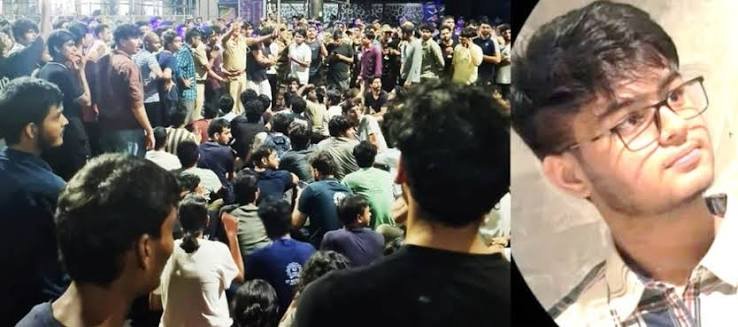
Mumbai: Following the shocking incident of IIT Bombay student Sahil Wakode’s suicide, MNS chief Raj Thackeray has expressed his candid views on social media. He strongly criticized the mounting pressure and commercialization within the education system, as well as the casteism that has proliferated over the last two decades.
In his post, Raj Thackeray wrote that the incident where twenty-year-old student Sahil Wakode ended his life is deeply unfortunate. Initially, the IIT administration had alleged that he used a mobile phone and ChatGPT during an exam. However, the administration later apologized, acknowledging that it was inappropriate to publicize this allegation before the investigation was complete. Meanwhile, Sahil’s family has alleged caste-based harassment; a case has been registered regarding these allegations, and an investigation is underway.
Raj Thackeray stated clearly, “Amidst this entire affair, a young man has been lost, yet no one seems to be discussing why he felt compelled to choose the path of suicide. If a student engages in malpractice during an exam, it is the professors' duty to stop them. However, branding the deceased student a criminal before the allegations are proven is wrong. Similarly, declaring professors guilty based on allegations of caste-based harassment before the inquiry concludes is also inappropriate.”
He further remarked that since the year 2000, casteism has become so rampant in Maharashtra that students are now conscious of the caste of the classmate sitting next to them. Even colleagues who have shared meals together for years in offices have begun viewing one another through the prism of caste. This toxic atmosphere has now reached IITs. Pandit Nehru had described IITs as the ‘Temples of Modern India.’ It is a profound tragedy that a student has committed suicide at such an institution and that the narrative of it being ‘caste-driven’ has come to the fore. Raj Thackeray also highlighted the cut-throat competition within the education system. “Be it IITs or the competitive exams preceding them, the competition is becoming lethal. Lakhs of students vie for just a few hundred seats. Even after selection, there is the burden of academics and the stress of campus placements. Moreover, the salaries aren't as good as they used to be. This sense of despair isn't limited to IIT students; it affects those in Commerce and Arts, as well as doctors and engineers. It was out of this despair that Sahil took such an extreme step.”
He also criticized the commercialization of education. “In the pursuit of commercializing education over the last 30–40 years, we have caused immense damage to the entire Indian education system. Radical changes are needed here.”
Raj Thackeray advised students to focus their agitation on rectifying the flaws within the education system. “Caste and religion are potent weapons wielded by certain politicians; once introduced, they make it easy to divert the issue. Do not get entangled in such matters. Instead, demand proper counseling facilities, the round-the-clock availability of psychiatrists, and a disciplinary process that ensures students do not break down under pressure. Such demands will compel the government and administration to provide answers.”
Finally, paying tribute to the late Sahil Wakode, Raj Thackeray said, “What happened was the result of flaws in the very education system we created. Working to address these issues would be the true tribute to Sahil and many others like him.”
Mumbai: Following the shocking incident of IIT Bombay student Sahil Wakode’s suicide, MNS chief Raj Thackeray has expressed his candid views on social media. He strongly criticized the mounting pressure and commercialization within the education system, as well as the casteism that has proliferated over the last two decades.
In his post, Raj Thackeray wrote that the incident where twenty-year-old student Sahil Wakode ended his life is deeply unfortunate. Initially, the IIT administration had alleged that he used a mobile phone and ChatGPT during an exam. However, the administration later apologized, acknowledging that it was inappropriate to publicize this allegation before the investigation was complete. Meanwhile, Sahil’s family has alleged caste-based harassment; a case has been registered regarding these allegations, and an investigation is underway.
Raj Thackeray stated clearly, “Amidst this entire affair, a young man has been lost, yet no one seems to be discussing why he felt compelled to choose the path of suicide. If a student engages in malpractice during an exam, it is the professors' duty to stop them. However, branding the deceased student a criminal before the allegations are proven is wrong. Similarly, declaring professors guilty based on allegations of caste-based harassment before the inquiry concludes is also inappropriate.”
He further remarked that since the year 2000, casteism has become so rampant in Maharashtra that students are now conscious of the caste of the classmate sitting next to them. Even colleagues who have shared meals together for years in offices have begun viewing one another through the prism of caste. This toxic atmosphere has now reached IITs. Pandit Nehru had described IITs as the ‘Temples of Modern India.’ It is a profound tragedy that a student has committed suicide at such an institution and that the narrative of it being ‘caste-driven’ has come to the fore. Raj Thackeray also highlighted the cut-throat competition within the education system. “Be it IITs or the competitive exams preceding them, the competition is becoming lethal. Lakhs of students vie for just a few hundred seats. Even after selection, there is the burden of academics and the stress of campus placements. Moreover, the salaries aren't as good as they used to be. This sense of despair isn't limited to IIT students; it affects those in Commerce and Arts, as well as doctors and engineers. It was out of this despair that Sahil took such an extreme step.”
He also criticized the commercialization of education. “In the pursuit of commercializing education over the last 30–40 years, we have caused immense damage to the entire Indian education system. Radical changes are needed here.”
Raj Thackeray advised students to focus their agitation on rectifying the flaws within the education system. “Caste and religion are potent weapons wielded by certain politicians; once introduced, they make it easy to divert the issue. Do not get entangled in such matters. Instead, demand proper counseling facilities, the round-the-clock availability of psychiatrists, and a disciplinary process that ensures students do not break down under pressure. Such demands will compel the government and administration to provide answers.”
Finally, paying tribute to the late Sahil Wakode, Raj Thackeray said, “What happened was the result of flaws in the very education system we created. Working to address these issues would be the true tribute to Sahil and many others like him.”
In his post, Raj Thackeray wrote that the incident where twenty-year-old student Sahil Wakode ended his life is deeply unfortunate. Initially, the IIT administration had alleged that he used a mobile phone and ChatGPT during an exam. However, the administration later apologized, acknowledging that it was inappropriate to publicize this allegation before the investigation was complete. Meanwhile, Sahil’s family has alleged caste-based harassment; a case has been registered regarding these allegations, and an investigation is underway.
Raj Thackeray stated clearly, “Amidst this entire affair, a young man has been lost, yet no one seems to be discussing why he felt compelled to choose the path of suicide. If a student engages in malpractice during an exam, it is the professors' duty to stop them. However, branding the deceased student a criminal before the allegations are proven is wrong. Similarly, declaring professors guilty based on allegations of caste-based harassment before the inquiry concludes is also inappropriate.”
He further remarked that since the year 2000, casteism has become so rampant in Maharashtra that students are now conscious of the caste of the classmate sitting next to them. Even colleagues who have shared meals together for years in offices have begun viewing one another through the prism of caste. This toxic atmosphere has now reached IITs. Pandit Nehru had described IITs as the ‘Temples of Modern India.’ It is a profound tragedy that a student has committed suicide at such an institution and that the narrative of it being ‘caste-driven’ has come to the fore. Raj Thackeray also highlighted the cut-throat competition within the education system. “Be it IITs or the competitive exams preceding them, the competition is becoming lethal. Lakhs of students vie for just a few hundred seats. Even after selection, there is the burden of academics and the stress of campus placements. Moreover, the salaries aren't as good as they used to be. This sense of despair isn't limited to IIT students; it affects those in Commerce and Arts, as well as doctors and engineers. It was out of this despair that Sahil took such an extreme step.”
He also criticized the commercialization of education. “In the pursuit of commercializing education over the last 30–40 years, we have caused immense damage to the entire Indian education system. Radical changes are needed here.”
Raj Thackeray advised students to focus their agitation on rectifying the flaws within the education system. “Caste and religion are potent weapons wielded by certain politicians; once introduced, they make it easy to divert the issue. Do not get entangled in such matters. Instead, demand proper counseling facilities, the round-the-clock availability of psychiatrists, and a disciplinary process that ensures students do not break down under pressure. Such demands will compel the government and administration to provide answers.”
Finally, paying tribute to the late Sahil Wakode, Raj Thackeray said, “What happened was the result of flaws in the very education system we created. Working to address these issues would be the true tribute to Sahil and many others like him.”