.jpg)


Semicon India 2026: India Achieved in Years What Took the World Decades; PM Modi Shares Semiconductor Sector Success Story
New Delhi: Establishing a country's semiconductor industry is not a process that happens overnight. Building the entire ecosystem—ranging from chip design and manufacturing to equipment, materials, and testing—typically takes decades. However, India has made significant strides in this sector within just a few years. Prime Minister Narendra Modi stated on Thursday that India accomplished in a few years what took many other nations two to three decades to achieve.
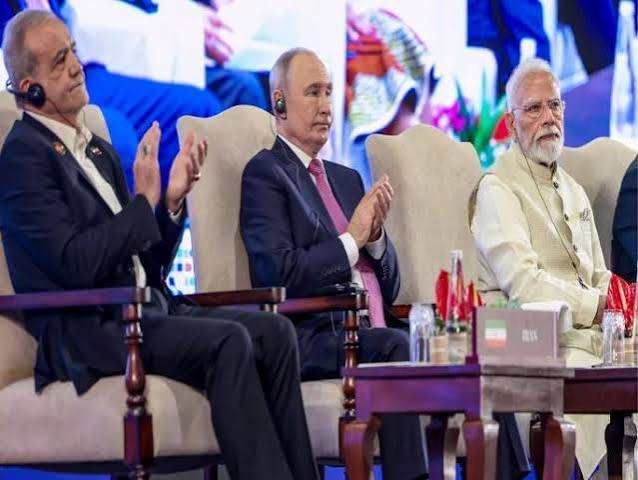
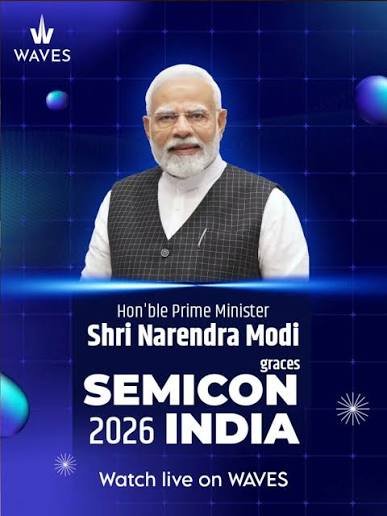
Modi was speaking at the inauguration of ‘Semicon India 2026’ at the Yashobhoomi Convention Centre in New Delhi. When the first ‘Semicon India’ event was held in 2022, discussions focused on the necessary policies for the semiconductor sector. Subsequently, talks regarding specific projects began. India’s journey progressed from signing files and performing groundbreaking ceremonies for projects to establishing pilot lines.
Last year, test chips and samples began rolling out from Indian units. Now, however, India has reached the stage of commercial production. Modi noted that chips manufactured in Indian plants have started reaching customers both domestically and globally, and commercial production is commencing at two additional plants in Mohali and Surat.
Building a semiconductor industry is not merely about setting up factories, as is the case with other industries; developing technical capabilities requires a long timeframe. Modi pointed out that wherever semiconductor ecosystems have developed globally, they were established only after decades of effort. India, conversely, worked simultaneously on chip design, manufacturing, equipment production, the materials ecosystem, and testing capabilities. Modi also highlighted that companies from the industrial sector have been crucial partners in this process. Following the initial phase in the semiconductor sector, India has now launched the second phase of the mission. While the first phase was valued at approximately $8 billion, the second phase has been allocated a budget of up to $13.5 billion. In this sector, international companies are permitted to collaborate with Indian startups, Indian design firms, and OCI-owned companies. Emphasis is also being placed on the growth of fabless companies and the creation of intellectual property within India. So far, 12 projects have received approval, and the scope is set to expand further in the upcoming phase.
Referring to the concept of "tape-out" in the semiconductor industry, Modi illustrated the trajectory of India's progress. "Tape-out" refers to the stage when a chip's design is finalized and sent for manufacturing; however, work does not cease there, as development on the next version of the chip begins simultaneously. Modi noted that India’s journey in the semiconductor sector is progressing in a similar manner. Having moved from laying the foundation to achieving commercial production within a few years, India now aims to build a more comprehensive semiconductor ecosystem in this second phase.
New Delhi: Establishing a country's semiconductor industry is not a process that happens overnight. Building the entire ecosystem—ranging from chip design and manufacturing to equipment, materials, and testing—typically takes decades. However, India has made significant strides in this sector within just a few years. Prime Minister Narendra Modi stated on Thursday that India accomplished in a few years what took many other nations two to three decades to achieve.
Modi was speaking at the inauguration of ‘Semicon India 2026’ at the Yashobhoomi Convention Centre in New Delhi. When the first ‘Semicon India’ event was held in 2022, discussions focused on the necessary policies for the semiconductor sector. Subsequently, talks regarding specific projects began. India’s journey progressed from signing files and performing groundbreaking ceremonies for projects to establishing pilot lines.
Last year, test chips and samples began rolling out from Indian units. Now, however, India has reached the stage of commercial production. Modi noted that chips manufactured in Indian plants have started reaching customers both domestically and globally, and commercial production is commencing at two additional plants in Mohali and Surat.
Building a semiconductor industry is not merely about setting up factories, as is the case with other industries; developing technical capabilities requires a long timeframe. Modi pointed out that wherever semiconductor ecosystems have developed globally, they were established only after decades of effort. India, conversely, worked simultaneously on chip design, manufacturing, equipment production, the materials ecosystem, and testing capabilities. Modi also highlighted that companies from the industrial sector have been crucial partners in this process. Following the initial phase in the semiconductor sector, India has now launched the second phase of the mission. While the first phase was valued at approximately $8 billion, the second phase has been allocated a budget of up to $13.5 billion. In this sector, international companies are permitted to collaborate with Indian startups, Indian design firms, and OCI-owned companies. Emphasis is also being placed on the growth of fabless companies and the creation of intellectual property within India. So far, 12 projects have received approval, and the scope is set to expand further in the upcoming phase.
Referring to the concept of "tape-out" in the semiconductor industry, Modi illustrated the trajectory of India's progress. "Tape-out" refers to the stage when a chip's design is finalized and sent for manufacturing; however, work does not cease there, as development on the next version of the chip begins simultaneously. Modi noted that India’s journey in the semiconductor sector is progressing in a similar manner. Having moved from laying the foundation to achieving commercial production within a few years, India now aims to build a more comprehensive semiconductor ecosystem in this second phase.
Modi was speaking at the inauguration of ‘Semicon India 2026’ at the Yashobhoomi Convention Centre in New Delhi. When the first ‘Semicon India’ event was held in 2022, discussions focused on the necessary policies for the semiconductor sector. Subsequently, talks regarding specific projects began. India’s journey progressed from signing files and performing groundbreaking ceremonies for projects to establishing pilot lines.
Last year, test chips and samples began rolling out from Indian units. Now, however, India has reached the stage of commercial production. Modi noted that chips manufactured in Indian plants have started reaching customers both domestically and globally, and commercial production is commencing at two additional plants in Mohali and Surat.
Building a semiconductor industry is not merely about setting up factories, as is the case with other industries; developing technical capabilities requires a long timeframe. Modi pointed out that wherever semiconductor ecosystems have developed globally, they were established only after decades of effort. India, conversely, worked simultaneously on chip design, manufacturing, equipment production, the materials ecosystem, and testing capabilities. Modi also highlighted that companies from the industrial sector have been crucial partners in this process. Following the initial phase in the semiconductor sector, India has now launched the second phase of the mission. While the first phase was valued at approximately $8 billion, the second phase has been allocated a budget of up to $13.5 billion. In this sector, international companies are permitted to collaborate with Indian startups, Indian design firms, and OCI-owned companies. Emphasis is also being placed on the growth of fabless companies and the creation of intellectual property within India. So far, 12 projects have received approval, and the scope is set to expand further in the upcoming phase.
Referring to the concept of "tape-out" in the semiconductor industry, Modi illustrated the trajectory of India's progress. "Tape-out" refers to the stage when a chip's design is finalized and sent for manufacturing; however, work does not cease there, as development on the next version of the chip begins simultaneously. Modi noted that India’s journey in the semiconductor sector is progressing in a similar manner. Having moved from laying the foundation to achieving commercial production within a few years, India now aims to build a more comprehensive semiconductor ecosystem in this second phase.