.jpg)
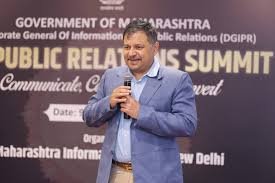


Significant Changes in Journalism Due to AI; - *Brijesh Singh*
Mumbai, 20th: In this rapidly evolving era of information and technology, Artificial Intelligence (AI) is bringing about significant changes within the field of journalism. Viewing these changes as opportunities, women journalists should strive to become more tech-savvy. Principal Secretary and Director General of the Department of Information and Public Relations, Brijesh Singh, expressed his confidence that by utilizing this technology, women journalists can drive positive transformation through the medium of journalism.
Principal Secretary Brijesh Singh was speaking on the topic 'Artificial Intelligence and its Impact on Journalism' during a one-day workshop titled 'Women, Media, and Technology.' This workshop was organized jointly by the National Commission for Women and the Directorate General of Information and Public Relations, and was held at the Rangaswar Auditorium of the Yashwantrao Chavan Pratishthan.
Present at the event were Vijaya Rahatkar, Chairperson of the National Commission for Women; Nandini Awade, Member Secretary of the State Commission for Women; renowned author Dr. Richa Sood; and senior journalist Dr. Swati Gupta from New Delhi.
While offering guidance on this occasion, Principal Secretary Brijesh Singh stated that Artificial Intelligence technology operates based on human-generated contexts; consequently, there remains a possibility of errors within it. When utilizing AI in journalism, one must ensure that the contextual information is accurate and error-free. Women journalists cover a diverse range of beats, including politics, entertainment, and crime. AI technology can prove to be an extremely valuable tool for women journalists while reporting on these various subjects.
**More Time for Analytical and Research-Oriented Work**
AI is not merely a tool for accessing information; it is a powerful medium that accelerates the pace of journalistic operations. By effectively utilizing AI for data collection, translation, and content presentation across various platforms, the overall quality of journalistic work can be significantly enhanced. Principal Secretary Brijesh Singh further noted that AI helps conserve human effort, thereby freeing up more time for journalists to dedicate to analytical and research-intensive aspects of their profession. In these changing times, utilizing AI tools is a necessity for women to ensure robust journalism and to remain at the forefront of the profession. To capitalize on the new opportunities unlocked by AI, it is essential for women journalists to enhance their technical skills. Noting that the coming era presents women with a unique opportunity to forge a distinct identity for themselves by embracing technology, Brijesh Singh also urged the National Commission for Women to initiate AI-centric skills training programs specifically for women journalists.
It is imperative to overcome the linguistic barrier of English and extend the application of AI to regional languages. Thanks to 'Indic' AI tools—such as 'Sarvam'—it will now become easier to deliver news and information from rural areas directly to the relevant audiences in their local languages. He further expressed hope that this would effectively eliminate language barriers, thereby universalizing access to information and ultimately benefiting women journalists working at the local level.
During the workshop, while providing an overview of the ongoing digital initiatives within the Department of Information and Public Relations, Principal Secretary Brijesh Singh stated that the department is currently leveraging Artificial Intelligence to facilitate the rapid dissemination of accurate news reports. He emphasized that an ethical framework is crucial when operating in the field of AI, noting that such guidelines have already been established in Europe. He further expressed the view that a similar ethical framework is equally necessary in India.
Mumbai, 20th: In this rapidly evolving era of information and technology, Artificial Intelligence (AI) is bringing about significant changes within the field of journalism. Viewing these changes as opportunities, women journalists should strive to become more tech-savvy. Principal Secretary and Director General of the Department of Information and Public Relations, Brijesh Singh, expressed his confidence that by utilizing this technology, women journalists can drive positive transformation through the medium of journalism.
Principal Secretary Brijesh Singh was speaking on the topic 'Artificial Intelligence and its Impact on Journalism' during a one-day workshop titled 'Women, Media, and Technology.' This workshop was organized jointly by the National Commission for Women and the Directorate General of Information and Public Relations, and was held at the Rangaswar Auditorium of the Yashwantrao Chavan Pratishthan.
Present at the event were Vijaya Rahatkar, Chairperson of the National Commission for Women; Nandini Awade, Member Secretary of the State Commission for Women; renowned author Dr. Richa Sood; and senior journalist Dr. Swati Gupta from New Delhi.
While offering guidance on this occasion, Principal Secretary Brijesh Singh stated that Artificial Intelligence technology operates based on human-generated contexts; consequently, there remains a possibility of errors within it. When utilizing AI in journalism, one must ensure that the contextual information is accurate and error-free. Women journalists cover a diverse range of beats, including politics, entertainment, and crime. AI technology can prove to be an extremely valuable tool for women journalists while reporting on these various subjects.
**More Time for Analytical and Research-Oriented Work**
AI is not merely a tool for accessing information; it is a powerful medium that accelerates the pace of journalistic operations. By effectively utilizing AI for data collection, translation, and content presentation across various platforms, the overall quality of journalistic work can be significantly enhanced. Principal Secretary Brijesh Singh further noted that AI helps conserve human effort, thereby freeing up more time for journalists to dedicate to analytical and research-intensive aspects of their profession. In these changing times, utilizing AI tools is a necessity for women to ensure robust journalism and to remain at the forefront of the profession. To capitalize on the new opportunities unlocked by AI, it is essential for women journalists to enhance their technical skills. Noting that the coming era presents women with a unique opportunity to forge a distinct identity for themselves by embracing technology, Brijesh Singh also urged the National Commission for Women to initiate AI-centric skills training programs specifically for women journalists.
It is imperative to overcome the linguistic barrier of English and extend the application of AI to regional languages. Thanks to 'Indic' AI tools—such as 'Sarvam'—it will now become easier to deliver news and information from rural areas directly to the relevant audiences in their local languages. He further expressed hope that this would effectively eliminate language barriers, thereby universalizing access to information and ultimately benefiting women journalists working at the local level.
During the workshop, while providing an overview of the ongoing digital initiatives within the Department of Information and Public Relations, Principal Secretary Brijesh Singh stated that the department is currently leveraging Artificial Intelligence to facilitate the rapid dissemination of accurate news reports. He emphasized that an ethical framework is crucial when operating in the field of AI, noting that such guidelines have already been established in Europe. He further expressed the view that a similar ethical framework is equally necessary in India.
Principal Secretary Brijesh Singh was speaking on the topic 'Artificial Intelligence and its Impact on Journalism' during a one-day workshop titled 'Women, Media, and Technology.' This workshop was organized jointly by the National Commission for Women and the Directorate General of Information and Public Relations, and was held at the Rangaswar Auditorium of the Yashwantrao Chavan Pratishthan.
Present at the event were Vijaya Rahatkar, Chairperson of the National Commission for Women; Nandini Awade, Member Secretary of the State Commission for Women; renowned author Dr. Richa Sood; and senior journalist Dr. Swati Gupta from New Delhi.
While offering guidance on this occasion, Principal Secretary Brijesh Singh stated that Artificial Intelligence technology operates based on human-generated contexts; consequently, there remains a possibility of errors within it. When utilizing AI in journalism, one must ensure that the contextual information is accurate and error-free. Women journalists cover a diverse range of beats, including politics, entertainment, and crime. AI technology can prove to be an extremely valuable tool for women journalists while reporting on these various subjects.
**More Time for Analytical and Research-Oriented Work**
AI is not merely a tool for accessing information; it is a powerful medium that accelerates the pace of journalistic operations. By effectively utilizing AI for data collection, translation, and content presentation across various platforms, the overall quality of journalistic work can be significantly enhanced. Principal Secretary Brijesh Singh further noted that AI helps conserve human effort, thereby freeing up more time for journalists to dedicate to analytical and research-intensive aspects of their profession. In these changing times, utilizing AI tools is a necessity for women to ensure robust journalism and to remain at the forefront of the profession. To capitalize on the new opportunities unlocked by AI, it is essential for women journalists to enhance their technical skills. Noting that the coming era presents women with a unique opportunity to forge a distinct identity for themselves by embracing technology, Brijesh Singh also urged the National Commission for Women to initiate AI-centric skills training programs specifically for women journalists.
It is imperative to overcome the linguistic barrier of English and extend the application of AI to regional languages. Thanks to 'Indic' AI tools—such as 'Sarvam'—it will now become easier to deliver news and information from rural areas directly to the relevant audiences in their local languages. He further expressed hope that this would effectively eliminate language barriers, thereby universalizing access to information and ultimately benefiting women journalists working at the local level.
During the workshop, while providing an overview of the ongoing digital initiatives within the Department of Information and Public Relations, Principal Secretary Brijesh Singh stated that the department is currently leveraging Artificial Intelligence to facilitate the rapid dissemination of accurate news reports. He emphasized that an ethical framework is crucial when operating in the field of AI, noting that such guidelines have already been established in Europe. He further expressed the view that a similar ethical framework is equally necessary in India.