.jpg)


Strengthening 'Nari Shakti': Three Bills Introduced in Parliament Today to Increase Lok Sabha Seats to 850 and Expedite 33% Women's Reservation
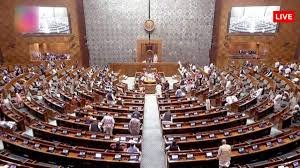
New Delhi: A three-day special session of Parliament commenced today, Thursday, April 16, 2026. During this session, the Central Government is set to introduce three crucial bills aimed at bringing the Women's Reservation Act into effect. These include the Constitution (131st Amendment) Bill, 2026; the Delimitation Bill, 2026; and the Union Territories Laws (Amendment) Bill, 2026.
The government's primary objective is to implement the *Nari Shakti Vandan Adhiniyam* (Women's Reservation Act)—passed in 2023—prior to the 2029 Lok Sabha elections, following a delimitation exercise based on the new census. To this end, there is a proposal to increase the number of Lok Sabha seats from the current 543 to approximately 850. Of these, one-third (approximately 33%) of the seats are to be reserved for women. This same reservation policy is also set to be applied to State Legislative Assemblies.
In a tweet posted this morning, Prime Minister Narendra Modi stated, "Starting today, during this special session of Parliament, the nation stands ready to take a historic step towards women's empowerment. We are moving forward with the conviction that honoring our 'Matrushakti' (mother power) and our sisters is, in essence, honoring the nation." The Prime Minister is scheduled to present the government's stance on these bills in the Lok Sabha today.
However, the Opposition has expressed its dissent regarding these bills. Parties such as the Congress, DMK, TMC, SP, RJD, and NCP (Sharad Pawar faction) held a joint meeting and resolved to oppose the delimitation provisions. The Opposition argues that the proposed new delimitation exercise could adversely impact the parliamentary representation of the southern, northeastern, and northwestern states. Congress leaders Mallikarjun Kharge and Jairam Ramesh have accused the government of introducing these bills with ulterior political motives. Nevertheless, while they support the core principle of women's reservation, they are demanding its immediate implementation—specifically without the prerequisite of delimitation. The government asserts that conducting delimitation based on the new census will ensure equal representation for all states and enable the effective implementation of women's reservation.
During this session, 2,000 women are expected to be present in Parliament. Today, a discussion on women's reservation is scheduled in the Lok Sabha, while the election for the post of Deputy Chairman of the Rajya Sabha will take place tomorrow.
This special session is considered politically significant, as it could bring about a major transformation in the country's electoral system ahead of the 2029 elections.
New Delhi: A three-day special session of Parliament commenced today, Thursday, April 16, 2026. During this session, the Central Government is set to introduce three crucial bills aimed at bringing the Women's Reservation Act into effect. These include the Constitution (131st Amendment) Bill, 2026; the Delimitation Bill, 2026; and the Union Territories Laws (Amendment) Bill, 2026.
The government's primary objective is to implement the *Nari Shakti Vandan Adhiniyam* (Women's Reservation Act)—passed in 2023—prior to the 2029 Lok Sabha elections, following a delimitation exercise based on the new census. To this end, there is a proposal to increase the number of Lok Sabha seats from the current 543 to approximately 850. Of these, one-third (approximately 33%) of the seats are to be reserved for women. This same reservation policy is also set to be applied to State Legislative Assemblies.
In a tweet posted this morning, Prime Minister Narendra Modi stated, "Starting today, during this special session of Parliament, the nation stands ready to take a historic step towards women's empowerment. We are moving forward with the conviction that honoring our 'Matrushakti' (mother power) and our sisters is, in essence, honoring the nation." The Prime Minister is scheduled to present the government's stance on these bills in the Lok Sabha today.
However, the Opposition has expressed its dissent regarding these bills. Parties such as the Congress, DMK, TMC, SP, RJD, and NCP (Sharad Pawar faction) held a joint meeting and resolved to oppose the delimitation provisions. The Opposition argues that the proposed new delimitation exercise could adversely impact the parliamentary representation of the southern, northeastern, and northwestern states. Congress leaders Mallikarjun Kharge and Jairam Ramesh have accused the government of introducing these bills with ulterior political motives. Nevertheless, while they support the core principle of women's reservation, they are demanding its immediate implementation—specifically without the prerequisite of delimitation. The government asserts that conducting delimitation based on the new census will ensure equal representation for all states and enable the effective implementation of women's reservation.
During this session, 2,000 women are expected to be present in Parliament. Today, a discussion on women's reservation is scheduled in the Lok Sabha, while the election for the post of Deputy Chairman of the Rajya Sabha will take place tomorrow.
This special session is considered politically significant, as it could bring about a major transformation in the country's electoral system ahead of the 2029 elections.
The government's primary objective is to implement the *Nari Shakti Vandan Adhiniyam* (Women's Reservation Act)—passed in 2023—prior to the 2029 Lok Sabha elections, following a delimitation exercise based on the new census. To this end, there is a proposal to increase the number of Lok Sabha seats from the current 543 to approximately 850. Of these, one-third (approximately 33%) of the seats are to be reserved for women. This same reservation policy is also set to be applied to State Legislative Assemblies.
In a tweet posted this morning, Prime Minister Narendra Modi stated, "Starting today, during this special session of Parliament, the nation stands ready to take a historic step towards women's empowerment. We are moving forward with the conviction that honoring our 'Matrushakti' (mother power) and our sisters is, in essence, honoring the nation." The Prime Minister is scheduled to present the government's stance on these bills in the Lok Sabha today.
However, the Opposition has expressed its dissent regarding these bills. Parties such as the Congress, DMK, TMC, SP, RJD, and NCP (Sharad Pawar faction) held a joint meeting and resolved to oppose the delimitation provisions. The Opposition argues that the proposed new delimitation exercise could adversely impact the parliamentary representation of the southern, northeastern, and northwestern states. Congress leaders Mallikarjun Kharge and Jairam Ramesh have accused the government of introducing these bills with ulterior political motives. Nevertheless, while they support the core principle of women's reservation, they are demanding its immediate implementation—specifically without the prerequisite of delimitation. The government asserts that conducting delimitation based on the new census will ensure equal representation for all states and enable the effective implementation of women's reservation.
During this session, 2,000 women are expected to be present in Parliament. Today, a discussion on women's reservation is scheduled in the Lok Sabha, while the election for the post of Deputy Chairman of the Rajya Sabha will take place tomorrow.
This special session is considered politically significant, as it could bring about a major transformation in the country's electoral system ahead of the 2029 elections.




.png)