.jpg)


'Nari Shakti Vandan Adhiniyam' Activated, but NDA Needs Opposition Support for
Amendments Due to Insufficient Numbers; Reservation Possible by 2029
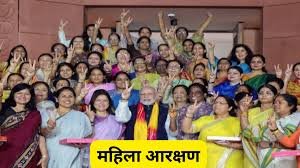
New Delhi: The Central Government issued a notification on April 16, 2026, bringing into force the Women's Reservation Act, 2023 (Nari Shakti Vandan Adhiniyam). Consequently, this legislation—which provides for a 33 percent reservation for women in the Lok Sabha and State Legislative Assemblies—has now been formally activated. However, this reservation will not be applicable to the current Lok Sabha and Legislative Assemblies.
According to the notification published by the Union Ministry of Law in the *Gazette of India*, April 16, 2026, has been designated as the effective date under Section 1(2) of the Constitution (106th Amendment) Act, 2023. This Act was originally passed by Parliament in September 2023.
Key Highlights:
**Condition for Implementation:** This reservation will come into effect only after the delimitation process—the redrawing of constituency boundaries—is completed following the 2027 Census. Consequently, the likelihood of it being implemented before 2034 is low. Women will not receive reservation benefits in the current legislative houses.
**Discussion on Amendments:** The government is considering amending the 2023 Act to implement this reservation prior to the 2029 Lok Sabha elections. To this end, the Constitution (131st Amendment) Bill, the Delimitation Bill, and the Union Territories Laws (Amendment) Bill have been introduced during a special session of Parliament (April 16–18).
**NDA's Insufficient Numbers:** A two-thirds majority in both Houses of Parliament (approximately 360 MPs in the Lok Sabha) is required to pass a Constitutional Amendment. The NDA currently commands the support of 293 MPs (54%), while the Opposition holds 233 seats. Therefore, the government requires the support—or at least the absence—of certain opposition parties to pass these bills. The NDA also lacks an absolute majority in the Rajya Sabha.
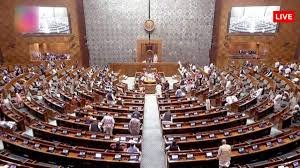
Prime Minister Narendra Modi has appealed to all political parties to extend their unanimous support to these bills. He stated that those who oppose these measures would have to pay a heavy price in the long run. An intense debate lasting approximately 40 minutes took place in Parliament regarding these bills. During the division of votes in the Lok Sabha, the tally stood at 251 in favor versus 185 against.
Political Context:
Although the government aims to implement women's reservation by 2029, a delay is inevitable as the delimitation process is linked to the census. Some political parties are opposing the delimitation exercise. The government faces two options: securing additional support or ensuring the absence of certain members during the vote.
While this development is regarded as significant from the perspective of women's empowerment, its actual implementation will remain contingent upon the census and the subsequent delimitation process.
Amendments Due to Insufficient Numbers; Reservation Possible by 2029
New Delhi: The Central Government issued a notification on April 16, 2026, bringing into force the Women's Reservation Act, 2023 (Nari Shakti Vandan Adhiniyam). Consequently, this legislation—which provides for a 33 percent reservation for women in the Lok Sabha and State Legislative Assemblies—has now been formally activated. However, this reservation will not be applicable to the current Lok Sabha and Legislative Assemblies.
According to the notification published by the Union Ministry of Law in the *Gazette of India*, April 16, 2026, has been designated as the effective date under Section 1(2) of the Constitution (106th Amendment) Act, 2023. This Act was originally passed by Parliament in September 2023.
Key Highlights:
**Condition for Implementation:** This reservation will come into effect only after the delimitation process—the redrawing of constituency boundaries—is completed following the 2027 Census. Consequently, the likelihood of it being implemented before 2034 is low. Women will not receive reservation benefits in the current legislative houses.
**Discussion on Amendments:** The government is considering amending the 2023 Act to implement this reservation prior to the 2029 Lok Sabha elections. To this end, the Constitution (131st Amendment) Bill, the Delimitation Bill, and the Union Territories Laws (Amendment) Bill have been introduced during a special session of Parliament (April 16–18).
**NDA's Insufficient Numbers:** A two-thirds majority in both Houses of Parliament (approximately 360 MPs in the Lok Sabha) is required to pass a Constitutional Amendment. The NDA currently commands the support of 293 MPs (54%), while the Opposition holds 233 seats. Therefore, the government requires the support—or at least the absence—of certain opposition parties to pass these bills. The NDA also lacks an absolute majority in the Rajya Sabha.
Prime Minister Narendra Modi has appealed to all political parties to extend their unanimous support to these bills. He stated that those who oppose these measures would have to pay a heavy price in the long run. An intense debate lasting approximately 40 minutes took place in Parliament regarding these bills. During the division of votes in the Lok Sabha, the tally stood at 251 in favor versus 185 against.
Political Context:
Although the government aims to implement women's reservation by 2029, a delay is inevitable as the delimitation process is linked to the census. Some political parties are opposing the delimitation exercise. The government faces two options: securing additional support or ensuring the absence of certain members during the vote.
While this development is regarded as significant from the perspective of women's empowerment, its actual implementation will remain contingent upon the census and the subsequent delimitation process.
New Delhi: The Central Government issued a notification on April 16, 2026, bringing into force the Women's Reservation Act, 2023 (Nari Shakti Vandan Adhiniyam). Consequently, this legislation—which provides for a 33 percent reservation for women in the Lok Sabha and State Legislative Assemblies—has now been formally activated. However, this reservation will not be applicable to the current Lok Sabha and Legislative Assemblies.
According to the notification published by the Union Ministry of Law in the *Gazette of India*, April 16, 2026, has been designated as the effective date under Section 1(2) of the Constitution (106th Amendment) Act, 2023. This Act was originally passed by Parliament in September 2023.
Key Highlights:
**Condition for Implementation:** This reservation will come into effect only after the delimitation process—the redrawing of constituency boundaries—is completed following the 2027 Census. Consequently, the likelihood of it being implemented before 2034 is low. Women will not receive reservation benefits in the current legislative houses.
**Discussion on Amendments:** The government is considering amending the 2023 Act to implement this reservation prior to the 2029 Lok Sabha elections. To this end, the Constitution (131st Amendment) Bill, the Delimitation Bill, and the Union Territories Laws (Amendment) Bill have been introduced during a special session of Parliament (April 16–18).
**NDA's Insufficient Numbers:** A two-thirds majority in both Houses of Parliament (approximately 360 MPs in the Lok Sabha) is required to pass a Constitutional Amendment. The NDA currently commands the support of 293 MPs (54%), while the Opposition holds 233 seats. Therefore, the government requires the support—or at least the absence—of certain opposition parties to pass these bills. The NDA also lacks an absolute majority in the Rajya Sabha.
Prime Minister Narendra Modi has appealed to all political parties to extend their unanimous support to these bills. He stated that those who oppose these measures would have to pay a heavy price in the long run. An intense debate lasting approximately 40 minutes took place in Parliament regarding these bills. During the division of votes in the Lok Sabha, the tally stood at 251 in favor versus 185 against.
Political Context:
Although the government aims to implement women's reservation by 2029, a delay is inevitable as the delimitation process is linked to the census. Some political parties are opposing the delimitation exercise. The government faces two options: securing additional support or ensuring the absence of certain members during the vote.
While this development is regarded as significant from the perspective of women's empowerment, its actual implementation will remain contingent upon the census and the subsequent delimitation process.