.jpg)
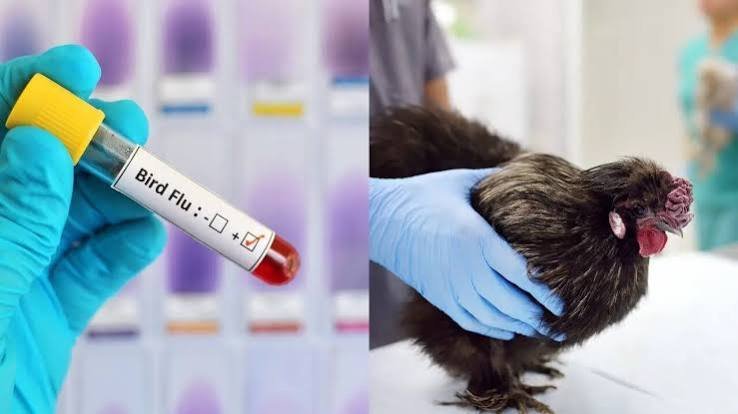


A Major Leap for India Against Bird Flu! Country’s First Indigenous H5N1 Vaccine to be Launched on November 20
Bhopal: In light of the growing threat of bird flu, India has taken a significant step for the animal husbandry and poultry sectors. For the first time, an indigenous vaccine has been developed in India to combat a specific strain of the H5N1 bird flu virus. The vaccine will be launched in Bhopal on November 20, 2024, by the Union Minister for Agriculture and Farmers' Welfare, Shivraj Singh Chouhan.
The vaccine was developed by the National Institute of High Security Animal Diseases (ICAR-NIHSAD), which operates under the Indian Council of Agricultural Research (ICAR) in Bhopal. It is designed to target the 'Clade 2.3.2.1a' variant of the H5N1 virus and utilizes 'inactivated' vaccine technology.
A Major Relief for the Poultry Industry
Bird flu is a highly contagious disease that spreads among birds. An outbreak can lead to mass mortality, and to control the spread of the infection, affected birds often have to be culled. This causes significant economic losses to the poultry farming business, egg production, and the broader poultry trade.
Bird flu was first reported in India in 2006. Since then, more than 500 outbreaks involving H5N1 and H5N8 virus strains have been recorded. Consequently, the development of an indigenous vaccine is considered a major achievement for the country.
Significant for Human Health as Well
The threat posed by the H5N1 virus is not limited to birds alone. In some instances, the virus has been found to infect other animals as well as humans. According to data from the World Health Organization (WHO), 1,003 human cases of H5N1 infection have been reported across 25 countries—including India—since 2003, resulting in 479 deaths.
Expected reduction in financial losses for farmers
This indigenous vaccine is expected to strengthen efforts to control bird flu within the poultry sector. It could prove vital in protecting birds, curbing the spread of the disease, and mitigating financial losses for those in the poultry business. However, the specific use of this vaccine and the associated official guidelines will be determined by the relevant veterinary authorities.
This is considered a significant achievement for India’s animal husbandry and biomedical research sectors.