Art should provide direction to society, rather than merely offering beauty and entertainment: Senior Artist Vasudeo Kamat

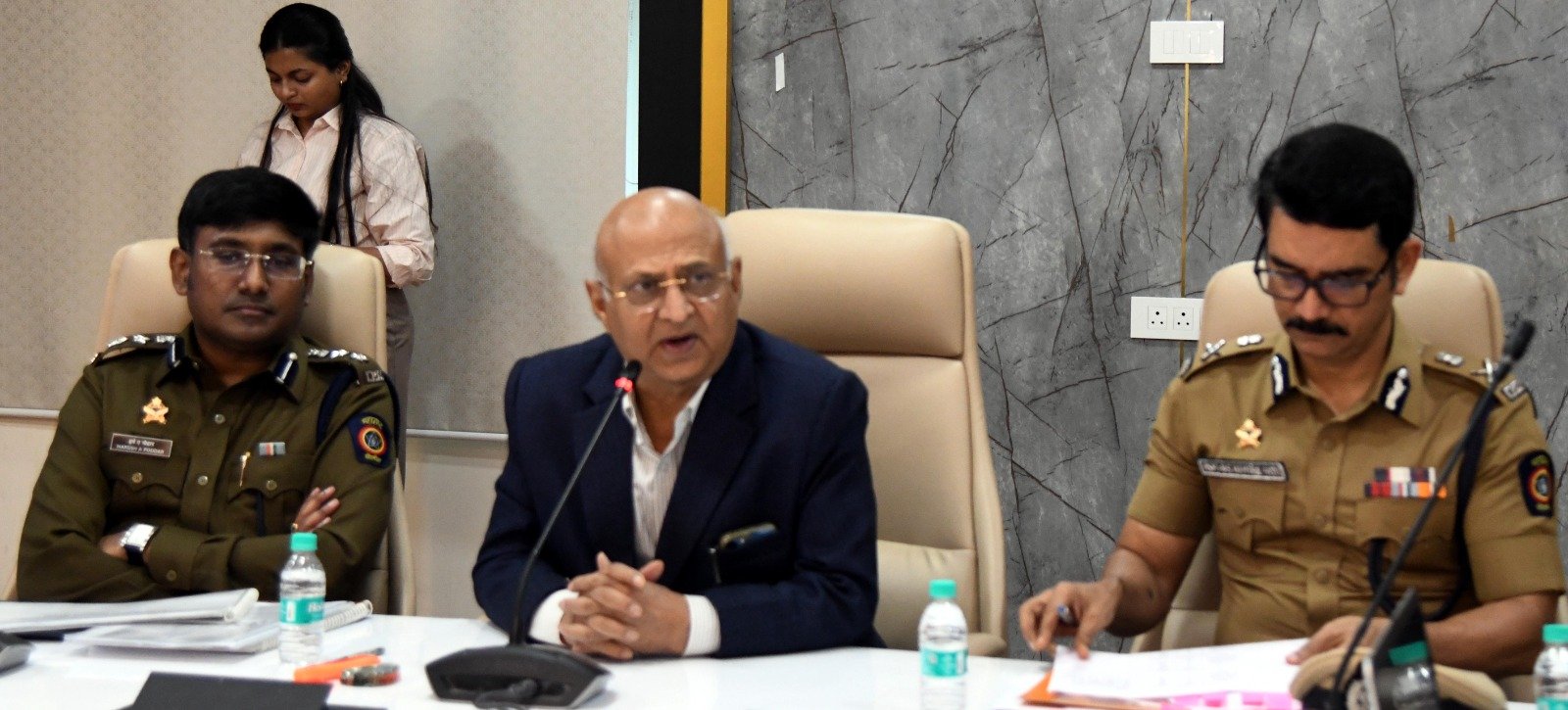
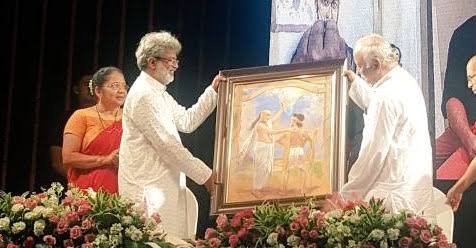
Pune: "A work of art is greater than the author, painter, sculptor, or actor who created it. Today, there is widespread discussion about Artificial Intelligence (AI). While there is no harm in using certain tools for recreation—and beauty and entertainment are inherent to art—it is crucial that art also serves to provide direction to society," remarked senior artist Vasudeo Kamat on Sunday. He was delivering the presidential address at the 'Sahitya Rangresha' (Literature, Colors, and Lines) literary festival, organized jointly by the Maharashtra Sahitya Parishad, Samarth Yuva Foundation, the Marathi Language Department, Sanskar Bharati (Western Maharashtra), and SNDT Women’s University. During the inauguration, Kamat created a painting on canvas, while senior artist Suhas Bahulkar lit the ceremonial lamp. Also present on the occasion were translator and artist Uma Kulkarni, Maharashtra Sahitya Parishad Secretary Prasad Mirasdar, Satish Kulkarni of Sanskar Bharati, Shahir Hemant Mawale, and Prashant Kulkarni. Kamat observed, "We are all born as artists. Children who draw on walls are often scolded and told, 'Don't draw; study instead.' Later, they grow up to become writers, actors, painters, doctors, engineers, or lawyers. While writing requires a specific language, the language of painting and sculpture is universal. Many people say, 'I don't quite understand this painting, but it feels pleasant.' This is perhaps why people often feel more comfortable choosing books that contain accessible, easily understood illustrations." He further added, "Laziness is the mother of invention. While inventions should ideally help overcome human lethargy, the current situation makes one wonder if some inventions are actually designed to make humans even lazier. An artist must carefully consider what to prioritize: practical utility or artistic expression." ‘An artist should pursue their discipline and rigorous practice in solitude, while the unveiling of their work and the act of seeking a response should take place within the community.’ Suhas Bahulkar noted that there was once a tradition of *pothis* (manuscript texts), where illustrations were created based on the content within those texts. With the advent of printing technology, this manuscript tradition faded away. However, illustrators continued to produce exceptional work for books covering subjects such as literature, research, history, politics, and social affairs. Uma Kulkarni remarked, ‘The relationship between an artist and a book-cover illustrator is much like that between a poet and a lyricist. If one asks whether a serious reader today decides to pick up a book based on its illustrations, the answer is simply “no.” As for me, I honed my own artistic practice by studying the illustrations found in *Diwali Ankas* (special Diwali-edition magazines).’