.jpg)


Implement Strict Traffic Enforcement to Prevent Road Accidents in Nagpur City Justice Abhay Manohar Sapre
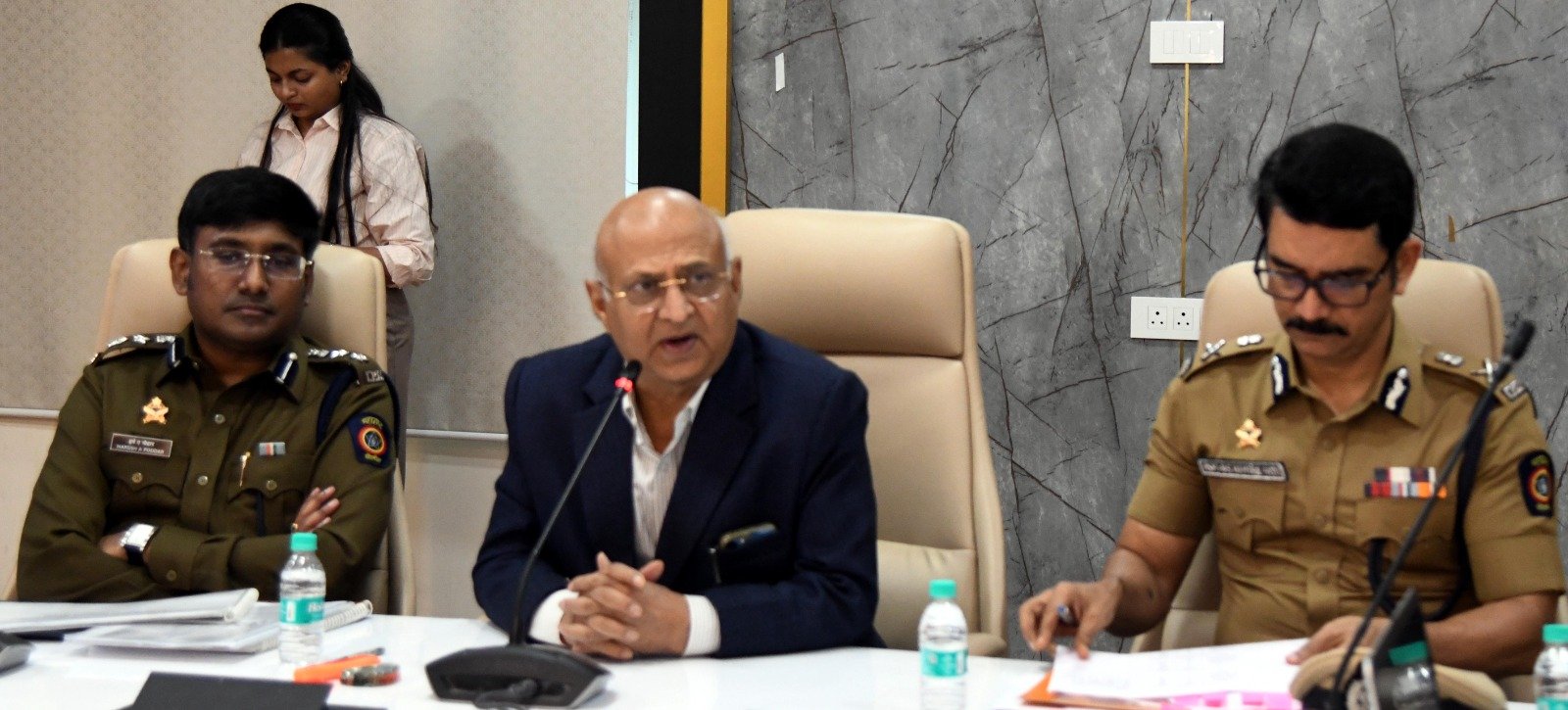
Nagpur, 14th: Justice Abhay Manohar Sapre, former Supreme Court Judge and Chairman of the Supreme Court Committee on Road Safety, has directed the implementation of strict and comprehensive measures to reduce the incidence of road accidents and accident-related fatalities in Nagpur city. After reviewing the city’s traffic system, he instructed the concerned officials to ensure effective enforcement to prevent such accidents.
An analysis of road accidents from January to October 2025 and the same period in 2026 reveals that 253 people died in accidents in 2025, while the figure for 2026 stands at 224. Although this represents an 11 percent decline, the fact that 224 lives were lost within ten months remains a matter of serious concern.
Accidental deaths have increased within the jurisdictions of 14 police stations in the city, and fatalities have risen on 7 out of the 10 identified "high-accident-prone" routes. Excessive speed has been identified as a primary factor in these fatalities, with the period between 9:00 PM and midnight emerging as the most dangerous time. Two-wheeler riders account for the highest number of deaths; specific areas of concern include the failure to wear helmets, driving under the influence of alcohol, driving against the flow of traffic (wrong-side driving), and accidents involving heavy vehicles.
Against this backdrop, Justice Abhay Manohar Sapre has directed that strict measures and enforcement protocols be implemented across Nagpur city.
Mandatory Helmet Use for Motorcyclists
Strict enforcement must be ensured to make the use of helmets mandatory for both two-wheeler riders and their pillion passengers. Implement a ‘No Helmet, No Petrol’ policy by conducting checks at petrol pumps. Raise public awareness regarding the use of high-quality, BIS/ISI-certified helmets.
Mandatory Vehicle Insurance
Launch a special inspection drive targeting vehicles that lack valid motor insurance. Take necessary measures to enforce a ‘No Insurance, No Petrol’ policy at petrol pumps.
Mandatory Use of Seat Belts
Ensure that all occupants in four-wheeled vehicles—including drivers and any other passengers required by law to do so—wear seat belts. Take regular and strict action against those who fail to use them.
Pedestrian Safety and ‘Model Streets’
Develop ‘Model Streets’ on selected city roads, prioritizing pedestrian safety. Clear encroachments from footpaths to provide safe, obstruction-free pathways for pedestrians. Implement specific safety measures in areas such as pedestrian crossings, schools, hospitals, and marketplaces.
Establishment of a State-of-the-Art Traffic Park via CSR
Develop a plan to establish a state-of-the-art Traffic Park in Nagpur city through Corporate Social Responsibility (CSR) initiatives. The park should be equipped with two driving simulators for four-wheeled vehicles and two for two-wheeled vehicles. The simulator screens should feature actual roads, intersections, and traffic conditions from Nagpur city. This will allow for the analysis of traffic violations and the evaluation of individual driving skills. Upon completion of the training, a system should be in place to issue certificates to the drivers, with copies provided to the Regional Transport Office (RTO), the traffic police, and other relevant authorities. Coordinate the participation of individuals from schools, colleges, coaching centers, government departments, and corporate organizations in this training program. Engage with an automobile manufacturing company to explore a potential CSR partnership for this project. It was directed that the Traffic Park should include family-friendly amenities as well as eateries offering food and refreshments.
Justice Sapre is scheduled to revisit Nagpur in January 2027, at which time a detailed discussion will be held regarding the site, infrastructure, CSR initiatives, and the layout for simulators at the Traffic Park. It was instructed that all necessary preparatory work be completed before this visit. Special inspection drives should be conducted in the vicinity of schools, colleges, and coaching classes to take action against underage drivers. Strict measures must be taken against underage drivers, individuals driving without a valid license, and those failing to wear helmets. Coordination should be established with educational institutions to implement a "No Helmet – No Attendance" policy. Furthermore, road safety awareness programs and workshops should be organized for students.
Strict action against drunk driving
Police checkpoints (nakabandi) and the use of breathalyzers should be increased, particularly during nighttime, weekends, and festive periods. Strict action, in accordance with existing legal provisions, must be taken against those found driving under the influence of alcohol. Meetings should be held with the owners and managers of hotels, bars, and liquor shops to instruct them to discourage their patrons from driving after consuming alcohol. These establishments should also display road safety messages and cooperate with the police.
Special drive against driving on the wrong side
Special teams should be deployed to take action against those driving on the wrong side of the road. In serious cases, and as permitted by law, the vehicles involved should be seized. Strict Enforcement Against Signal Jumping
Action should be taken against motorists who jump traffic signals, utilizing both CCTV surveillance and on-road inspections. Special attention must be focused on repeat offenders, with strict legal action taken against them.
Road Safety Compliance App for Government Employees
Regarding the driving licenses of government employees, and...

.jpg)