.jpg)


Gadkari criticized over ethanol policy, but Kishore Tiwari says—protest outside the homes of Congress-NCP 'Sugar Barons' first!
Amravati: Youth Congress activists staged a protest on Monday outside the Nagpur residence of Union Minister for Road Transport and Highways Nitin Gadkari, opposing the E-20 ethanol-blended petrol policy. Opposition parties have been targeting Gadkari over this issue for the past few days. However, farmer leader Kishore Tiwari has come to Gadkari's defense and instead criticized leaders from the Congress and Nationalist Congress Party (NCP).
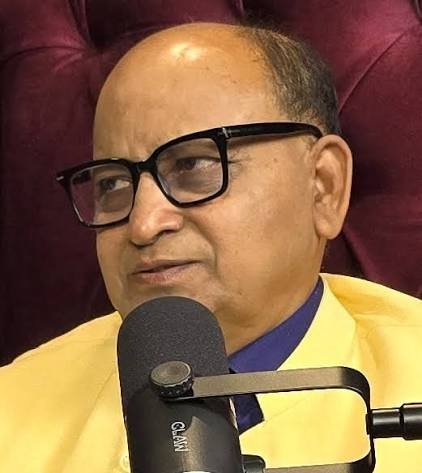
Kishore Tiwari said, "Maharashtra accounts for 25 percent of the ethanol sold in India. The Youth Congress should first stage protests outside the homes of the Congress and NCP leaders who sell this ethanol."
He further added, "Today, the majority of companies involved in ethanol production and sales are owned by Congress and NCP leaders. A full 25 percent of the total ethanol supplied to government oil companies comes from Congress-NCP 'Sugar Barons' alone. It is unfortunate for the Congress party to make a scapegoat of Nitin Gadkari—whose family members do not hold even a one percent stake in this business—and attempt to tarnish his reputation."
Tiwari also released a list of leaders associated with ethanol-producing sugar factories. The list includes Balasaheb Thorat, Ashok Chavan, Amit Deshmukh, Diliprao Deshmukh, Vijay Wadettiwar, Harshvardhan Patil, Vijaysinh Mohite-Patil, Jayant Patil, Shashikant Shinde, Abhijit Patil, Hasan Mushrif, Satej Patil, Mansingrao Naik, Rohit Pawar, Dilip Walse-Patil, and Prakash Solanke.
Kishore Tiwari urged Youth Congress leaders to first protest outside the homes of Vishwajeet Kadam, Amit Deshmukh, and Vijay Wadettiwar and demand a halt to ethanol production. He clarified that it is extremely unfair to portray the ethanol-blended petrol program as the personal project or business interest of a single individual—specifically Nitin Gadkari. Tiwari maintains that it was Prime Minister Narendra Modi who spearheaded this policy and implemented the program to enhance the country's energy security, save foreign exchange, and boost farmers' incomes.
Amravati: Youth Congress activists staged a protest on Monday outside the Nagpur residence of Union Minister for Road Transport and Highways Nitin Gadkari, opposing the E-20 ethanol-blended petrol policy. Opposition parties have been targeting Gadkari over this issue for the past few days. However, farmer leader Kishore Tiwari has come to Gadkari's defense and instead criticized leaders from the Congress and Nationalist Congress Party (NCP).
Kishore Tiwari said, "Maharashtra accounts for 25 percent of the ethanol sold in India. The Youth Congress should first stage protests outside the homes of the Congress and NCP leaders who sell this ethanol."
He further added, "Today, the majority of companies involved in ethanol production and sales are owned by Congress and NCP leaders. A full 25 percent of the total ethanol supplied to government oil companies comes from Congress-NCP 'Sugar Barons' alone. It is unfortunate for the Congress party to make a scapegoat of Nitin Gadkari—whose family members do not hold even a one percent stake in this business—and attempt to tarnish his reputation."
Tiwari also released a list of leaders associated with ethanol-producing sugar factories. The list includes Balasaheb Thorat, Ashok Chavan, Amit Deshmukh, Diliprao Deshmukh, Vijay Wadettiwar, Harshvardhan Patil, Vijaysinh Mohite-Patil, Jayant Patil, Shashikant Shinde, Abhijit Patil, Hasan Mushrif, Satej Patil, Mansingrao Naik, Rohit Pawar, Dilip Walse-Patil, and Prakash Solanke.
Kishore Tiwari urged Youth Congress leaders to first protest outside the homes of Vishwajeet Kadam, Amit Deshmukh, and Vijay Wadettiwar and demand a halt to ethanol production. He clarified that it is extremely unfair to portray the ethanol-blended petrol program as the personal project or business interest of a single individual—specifically Nitin Gadkari. Tiwari maintains that it was Prime Minister Narendra Modi who spearheaded this policy and implemented the program to enhance the country's energy security, save foreign exchange, and boost farmers' incomes.
Kishore Tiwari said, "Maharashtra accounts for 25 percent of the ethanol sold in India. The Youth Congress should first stage protests outside the homes of the Congress and NCP leaders who sell this ethanol."
He further added, "Today, the majority of companies involved in ethanol production and sales are owned by Congress and NCP leaders. A full 25 percent of the total ethanol supplied to government oil companies comes from Congress-NCP 'Sugar Barons' alone. It is unfortunate for the Congress party to make a scapegoat of Nitin Gadkari—whose family members do not hold even a one percent stake in this business—and attempt to tarnish his reputation."
Tiwari also released a list of leaders associated with ethanol-producing sugar factories. The list includes Balasaheb Thorat, Ashok Chavan, Amit Deshmukh, Diliprao Deshmukh, Vijay Wadettiwar, Harshvardhan Patil, Vijaysinh Mohite-Patil, Jayant Patil, Shashikant Shinde, Abhijit Patil, Hasan Mushrif, Satej Patil, Mansingrao Naik, Rohit Pawar, Dilip Walse-Patil, and Prakash Solanke.
Kishore Tiwari urged Youth Congress leaders to first protest outside the homes of Vishwajeet Kadam, Amit Deshmukh, and Vijay Wadettiwar and demand a halt to ethanol production. He clarified that it is extremely unfair to portray the ethanol-blended petrol program as the personal project or business interest of a single individual—specifically Nitin Gadkari. Tiwari maintains that it was Prime Minister Narendra Modi who spearheaded this policy and implemented the program to enhance the country's energy security, save foreign exchange, and boost farmers' incomes.