.jpg)


Maharashtra Clinical Establishments Bill 2026: Lacks Provisions for Patient Rights and Price Regulation; Reforms Essential
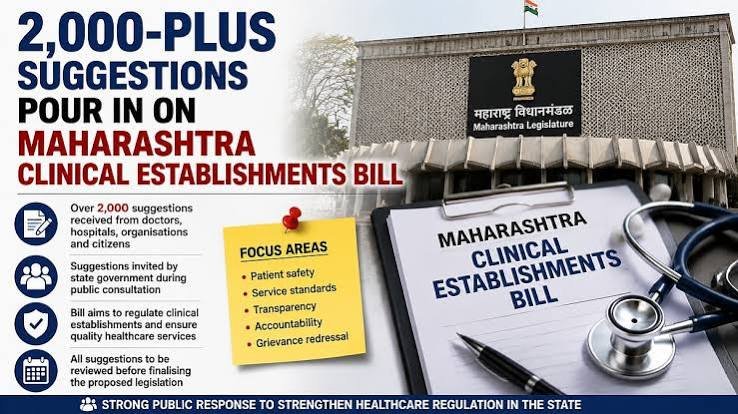
Maharashtra Clinical Establishments (Registration and Regulation) Bill: In July 2026, the Government of Maharashtra introduced the ‘Maharashtra Clinical Establishments (Registration and Regulation) Bill, 2026’ in the state legislature. Experts believe such legislation is necessary to register and regulate private hospitals, clinics, and other healthcare facilities. However, in an article for *Loksatta*, Dr. Abhay Shukla points out that the current draft overlooks the fundamental rights of patients.
While the Bill mandates that hospitals display a price list, it fails to impose any control over the actual costs of treatment. Citing the example of the COVID-19 pandemic—during which private hospitals in Maharashtra overcharged approximately four lakh patients—Dr. Shukla argues that the regulation of treatment costs is essential. In the state, 81 percent of hospital-based treatments take place in the private sector. Due to the high cost of healthcare, nearly 2.5 million (25 lakh) people are pushed into poverty every year. Over the last seven years, the average expenditure in private hospitals has risen by 87 percent.
Several patient rights, which were included in the existing ‘Maharashtra Nursing Homes Registration Act, 2021,’ have been omitted from the new Bill. Provisions prohibiting the detention of patients—or the withholding of a deceased person’s body—due to non-payment of bills have been removed. Furthermore, there is a proposal to scrap the district-level toll-free grievance redressal mechanism and the system for resolving complaints within 24 hours. Experts are demanding that all 20 rights outlined in the ‘National Charter of Patients’ Rights’ be incorporated into the Bill. It has also been recommended to cap profit margins on medicines and medical supplies. Suggestions include: ensuring patients are not compelled to purchase medicines exclusively from a hospital’s own pharmacy; requiring that both the purchase price and the selling price be clearly stated on bills; and imposing a maximum profit margin of 30 percent on medical consumables.
There is a demand that the State Council should not consist solely of health officials and representatives from medical councils, but should also include representatives from patient advocacy groups, social organizations, women’s associations, and unions of nurses and doctors. Furthermore, it has been advised that small, rural, and charitable hospitals should not be burdened with unnecessary infrastructural requirements.
The bill is currently under discussion by a joint committee of legislators and is expected to be presented for approval during the upcoming winter session. Consequently, Dr. Shukla has urged citizens, patient groups, and social organizations to strongly press the legislators to strengthen provisions for patient rights, price controls, and grievance redressal mechanisms.
Maharashtra Clinical Establishments (Registration and Regulation) Bill: In July 2026, the Government of Maharashtra introduced the ‘Maharashtra Clinical Establishments (Registration and Regulation) Bill, 2026’ in the state legislature. Experts believe such legislation is necessary to register and regulate private hospitals, clinics, and other healthcare facilities. However, in an article for *Loksatta*, Dr. Abhay Shukla points out that the current draft overlooks the fundamental rights of patients.
While the Bill mandates that hospitals display a price list, it fails to impose any control over the actual costs of treatment. Citing the example of the COVID-19 pandemic—during which private hospitals in Maharashtra overcharged approximately four lakh patients—Dr. Shukla argues that the regulation of treatment costs is essential. In the state, 81 percent of hospital-based treatments take place in the private sector. Due to the high cost of healthcare, nearly 2.5 million (25 lakh) people are pushed into poverty every year. Over the last seven years, the average expenditure in private hospitals has risen by 87 percent.
Several patient rights, which were included in the existing ‘Maharashtra Nursing Homes Registration Act, 2021,’ have been omitted from the new Bill. Provisions prohibiting the detention of patients—or the withholding of a deceased person’s body—due to non-payment of bills have been removed. Furthermore, there is a proposal to scrap the district-level toll-free grievance redressal mechanism and the system for resolving complaints within 24 hours. Experts are demanding that all 20 rights outlined in the ‘National Charter of Patients’ Rights’ be incorporated into the Bill. It has also been recommended to cap profit margins on medicines and medical supplies. Suggestions include: ensuring patients are not compelled to purchase medicines exclusively from a hospital’s own pharmacy; requiring that both the purchase price and the selling price be clearly stated on bills; and imposing a maximum profit margin of 30 percent on medical consumables.
There is a demand that the State Council should not consist solely of health officials and representatives from medical councils, but should also include representatives from patient advocacy groups, social organizations, women’s associations, and unions of nurses and doctors. Furthermore, it has been advised that small, rural, and charitable hospitals should not be burdened with unnecessary infrastructural requirements.
The bill is currently under discussion by a joint committee of legislators and is expected to be presented for approval during the upcoming winter session. Consequently, Dr. Shukla has urged citizens, patient groups, and social organizations to strongly press the legislators to strengthen provisions for patient rights, price controls, and grievance redressal mechanisms.
While the Bill mandates that hospitals display a price list, it fails to impose any control over the actual costs of treatment. Citing the example of the COVID-19 pandemic—during which private hospitals in Maharashtra overcharged approximately four lakh patients—Dr. Shukla argues that the regulation of treatment costs is essential. In the state, 81 percent of hospital-based treatments take place in the private sector. Due to the high cost of healthcare, nearly 2.5 million (25 lakh) people are pushed into poverty every year. Over the last seven years, the average expenditure in private hospitals has risen by 87 percent.
Several patient rights, which were included in the existing ‘Maharashtra Nursing Homes Registration Act, 2021,’ have been omitted from the new Bill. Provisions prohibiting the detention of patients—or the withholding of a deceased person’s body—due to non-payment of bills have been removed. Furthermore, there is a proposal to scrap the district-level toll-free grievance redressal mechanism and the system for resolving complaints within 24 hours. Experts are demanding that all 20 rights outlined in the ‘National Charter of Patients’ Rights’ be incorporated into the Bill. It has also been recommended to cap profit margins on medicines and medical supplies. Suggestions include: ensuring patients are not compelled to purchase medicines exclusively from a hospital’s own pharmacy; requiring that both the purchase price and the selling price be clearly stated on bills; and imposing a maximum profit margin of 30 percent on medical consumables.
There is a demand that the State Council should not consist solely of health officials and representatives from medical councils, but should also include representatives from patient advocacy groups, social organizations, women’s associations, and unions of nurses and doctors. Furthermore, it has been advised that small, rural, and charitable hospitals should not be burdened with unnecessary infrastructural requirements.
The bill is currently under discussion by a joint committee of legislators and is expected to be presented for approval during the upcoming winter session. Consequently, Dr. Shukla has urged citizens, patient groups, and social organizations to strongly press the legislators to strengthen provisions for patient rights, price controls, and grievance redressal mechanisms.