.jpg)
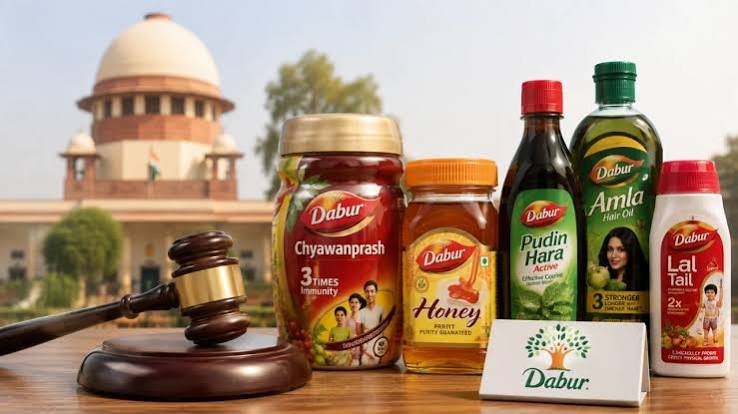


Major relief for Dabur from Delhi High Court; FSSAI ban on products claiming ‘100% purity’ stayed
Delhi: The Delhi High Court has granted significant interim relief to Dabur India in its dispute with the Food Safety and Standards Authority of India (FSSAI). The court has stayed the FSSAI order that prohibited the sale of food products bearing claims such as ‘100% pure’, ‘100% natural’, and ‘100% organic’. Consequently, Dabur can currently continue to sell these products in the market.
What is the matter?
A few days ago, the FSSAI issued an order directing Dabur to withdraw food products sold with claims of being ‘100% pure’, ‘100% natural’, and ‘100% organic’ from the market. The authority contended that such claims are difficult to substantiate fully and could mislead consumers.
Why did Dabur file a petition in court?
Dabur filed a petition in the Delhi High Court challenging this order. The company stated that the FSSAI issued the order directly without serving a show-cause notice or hearing the company's side. Products have been sold using these labels for years; the company argued in court that suddenly banning sales in such a manner did not constitute due legal process.
What did the court decide?
During the hearing, the Delhi High Court granted an interim stay on the FSSAI order. The court clarified that this temporary relief is granted to Dabur pending the final hearing of the case. As a result, there is currently no impediment to the company selling products bearing ‘100%’ claims. However, this is not the final verdict, and further hearings will take place.
Which products are involved in the dispute?
This dispute concerns several of Dabur's food products. These primarily include:
Honey
Desi ghee
Coconut oil
Other food products bearing a ‘100%’ claim
Claims such as ‘100% pure’ or ‘100% natural’ were made on the packaging of these products.
What is FSSAI’s objection?
According to FSSAI, claims like ‘100%’ can be legally misleading. This is because fully verifying such claims is difficult, creating a potential for consumer confusion.
Impact on consumers?
There will be no immediate impact on consumers due to this decision. Dabur’s products bearing the ‘100%’ claim will remain available in the market as before. However, if the final verdict favors FSSAI, companies like Dabur—and other food manufacturers—may be required to alter their labels, packaging, and advertisements.
What next?
The matter is set for a further hearing at the Delhi High Court. The final verdict could establish significant guidelines for the food industry nationwide regarding the use of claims like ‘100% pure’ or ‘100% natural’ on food products.
Delhi: The Delhi High Court has granted significant interim relief to Dabur India in its dispute with the Food Safety and Standards Authority of India (FSSAI). The court has stayed the FSSAI order that prohibited the sale of food products bearing claims such as ‘100% pure’, ‘100% natural’, and ‘100% organic’. Consequently, Dabur can currently continue to sell these products in the market.
What is the matter?
A few days ago, the FSSAI issued an order directing Dabur to withdraw food products sold with claims of being ‘100% pure’, ‘100% natural’, and ‘100% organic’ from the market. The authority contended that such claims are difficult to substantiate fully and could mislead consumers.
Why did Dabur file a petition in court?
Dabur filed a petition in the Delhi High Court challenging this order. The company stated that the FSSAI issued the order directly without serving a show-cause notice or hearing the company's side. Products have been sold using these labels for years; the company argued in court that suddenly banning sales in such a manner did not constitute due legal process.
What did the court decide?
During the hearing, the Delhi High Court granted an interim stay on the FSSAI order. The court clarified that this temporary relief is granted to Dabur pending the final hearing of the case. As a result, there is currently no impediment to the company selling products bearing ‘100%’ claims. However, this is not the final verdict, and further hearings will take place.
Which products are involved in the dispute?
This dispute concerns several of Dabur's food products. These primarily include:
Honey
Desi ghee
Coconut oil
Other food products bearing a ‘100%’ claim
Claims such as ‘100% pure’ or ‘100% natural’ were made on the packaging of these products.
What is FSSAI’s objection?
According to FSSAI, claims like ‘100%’ can be legally misleading. This is because fully verifying such claims is difficult, creating a potential for consumer confusion.
Impact on consumers?
There will be no immediate impact on consumers due to this decision. Dabur’s products bearing the ‘100%’ claim will remain available in the market as before. However, if the final verdict favors FSSAI, companies like Dabur—and other food manufacturers—may be required to alter their labels, packaging, and advertisements.
What next?
The matter is set for a further hearing at the Delhi High Court. The final verdict could establish significant guidelines for the food industry nationwide regarding the use of claims like ‘100% pure’ or ‘100% natural’ on food products.
What is the matter?
A few days ago, the FSSAI issued an order directing Dabur to withdraw food products sold with claims of being ‘100% pure’, ‘100% natural’, and ‘100% organic’ from the market. The authority contended that such claims are difficult to substantiate fully and could mislead consumers.
Why did Dabur file a petition in court?
Dabur filed a petition in the Delhi High Court challenging this order. The company stated that the FSSAI issued the order directly without serving a show-cause notice or hearing the company's side. Products have been sold using these labels for years; the company argued in court that suddenly banning sales in such a manner did not constitute due legal process.
What did the court decide?
During the hearing, the Delhi High Court granted an interim stay on the FSSAI order. The court clarified that this temporary relief is granted to Dabur pending the final hearing of the case. As a result, there is currently no impediment to the company selling products bearing ‘100%’ claims. However, this is not the final verdict, and further hearings will take place.
Which products are involved in the dispute?
This dispute concerns several of Dabur's food products. These primarily include:
Honey
Desi ghee
Coconut oil
Other food products bearing a ‘100%’ claim
Claims such as ‘100% pure’ or ‘100% natural’ were made on the packaging of these products.
What is FSSAI’s objection?
According to FSSAI, claims like ‘100%’ can be legally misleading. This is because fully verifying such claims is difficult, creating a potential for consumer confusion.
Impact on consumers?
There will be no immediate impact on consumers due to this decision. Dabur’s products bearing the ‘100%’ claim will remain available in the market as before. However, if the final verdict favors FSSAI, companies like Dabur—and other food manufacturers—may be required to alter their labels, packaging, and advertisements.
What next?
The matter is set for a further hearing at the Delhi High Court. The final verdict could establish significant guidelines for the food industry nationwide regarding the use of claims like ‘100% pure’ or ‘100% natural’ on food products.