.jpg)
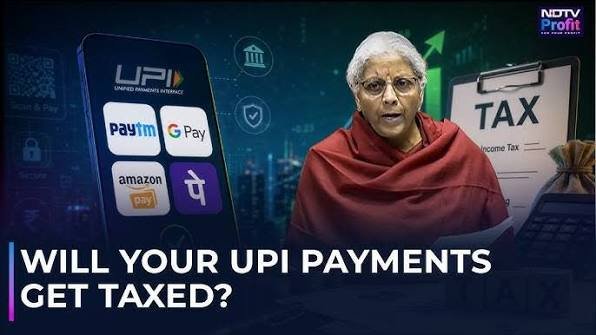


MDR charges on UPI transactions? Finance Minister Nirmala Sitharaman clarifies – no direct impact on common customers
Delhi: Union Finance Minister Nirmala Sitharaman has provided important information in response to discussions regarding the potential imposition of Merchant Discount Rate (MDR) charges on UPI transactions. She clarified that MDR would apply only to merchants; there would be no direct impact on ordinary UPI customers.
Congress leader Jairam Ramesh had alleged that charges might be levied on UPI transactions, affecting the common citizen. Responding to this, Sitharaman stated there was no cause for such concern. She clarified on Twitter that MDR would apply only to merchants, not to end-users or customers. This move would enable banks and fintech companies to invest more in digital payment infrastructure, security, and innovation.
No final decision yet
The Finance Minister stated that the Services Steering Committee, led by UPI and the National Payments Corporation of India (NPCI), has not yet taken a final decision regarding MDR. A final decision will be made only after the ‘Taxation and Other Laws (Amendment) Bill, 2026’ is passed by Parliament.
This Bill seeks to empower the government to issue notifications deciding which electronic payment methods or transactions will attract charges and which will remain fee-free. The Bill proposes lifting the ban on levying MDR on notified electronic payment transactions for banks and payment service providers. Following this, there is speculation that the government might permit the levy of MDR ranging from 0.25% to 0.40% on merchants for UPI transactions exceeding ?2,000.
Common customers will benefit
Sitharaman stated that the revenue generated from MDR would be utilized by banks and fintech companies to make the digital payment network more secure, robust, and state-of-the-art. Consequently, common customers using UPI will receive enhanced security and superior service. According to government estimates, transactions of up to ?2,000 account for approximately 95% of all UPI transactions, while those exceeding ?2,000 make up only 5%. However, these larger transactions contribute about 65% of the total transaction value. Consequently, the proposed MDR is highly unlikely to impact small, daily transactions such as those for milk, vegetables, groceries, and auto-rickshaw or taxi fares.
In July, the country recorded approximately 23.7 billion UPI transactions, with a total value of ?29.9 lakh crore. This highlights the growing adoption of digital payments.
The Finance Minister's clarification brings relief to ordinary consumers. A final decision is expected only after parliamentary approval.
Delhi: Union Finance Minister Nirmala Sitharaman has provided important information in response to discussions regarding the potential imposition of Merchant Discount Rate (MDR) charges on UPI transactions. She clarified that MDR would apply only to merchants; there would be no direct impact on ordinary UPI customers.
Congress leader Jairam Ramesh had alleged that charges might be levied on UPI transactions, affecting the common citizen. Responding to this, Sitharaman stated there was no cause for such concern. She clarified on Twitter that MDR would apply only to merchants, not to end-users or customers. This move would enable banks and fintech companies to invest more in digital payment infrastructure, security, and innovation.
No final decision yet
The Finance Minister stated that the Services Steering Committee, led by UPI and the National Payments Corporation of India (NPCI), has not yet taken a final decision regarding MDR. A final decision will be made only after the ‘Taxation and Other Laws (Amendment) Bill, 2026’ is passed by Parliament.
This Bill seeks to empower the government to issue notifications deciding which electronic payment methods or transactions will attract charges and which will remain fee-free. The Bill proposes lifting the ban on levying MDR on notified electronic payment transactions for banks and payment service providers. Following this, there is speculation that the government might permit the levy of MDR ranging from 0.25% to 0.40% on merchants for UPI transactions exceeding ?2,000.
Common customers will benefit
Sitharaman stated that the revenue generated from MDR would be utilized by banks and fintech companies to make the digital payment network more secure, robust, and state-of-the-art. Consequently, common customers using UPI will receive enhanced security and superior service. According to government estimates, transactions of up to ?2,000 account for approximately 95% of all UPI transactions, while those exceeding ?2,000 make up only 5%. However, these larger transactions contribute about 65% of the total transaction value. Consequently, the proposed MDR is highly unlikely to impact small, daily transactions such as those for milk, vegetables, groceries, and auto-rickshaw or taxi fares.
In July, the country recorded approximately 23.7 billion UPI transactions, with a total value of ?29.9 lakh crore. This highlights the growing adoption of digital payments.
The Finance Minister's clarification brings relief to ordinary consumers. A final decision is expected only after parliamentary approval.
Congress leader Jairam Ramesh had alleged that charges might be levied on UPI transactions, affecting the common citizen. Responding to this, Sitharaman stated there was no cause for such concern. She clarified on Twitter that MDR would apply only to merchants, not to end-users or customers. This move would enable banks and fintech companies to invest more in digital payment infrastructure, security, and innovation.
No final decision yet
The Finance Minister stated that the Services Steering Committee, led by UPI and the National Payments Corporation of India (NPCI), has not yet taken a final decision regarding MDR. A final decision will be made only after the ‘Taxation and Other Laws (Amendment) Bill, 2026’ is passed by Parliament.
This Bill seeks to empower the government to issue notifications deciding which electronic payment methods or transactions will attract charges and which will remain fee-free. The Bill proposes lifting the ban on levying MDR on notified electronic payment transactions for banks and payment service providers. Following this, there is speculation that the government might permit the levy of MDR ranging from 0.25% to 0.40% on merchants for UPI transactions exceeding ?2,000.
Common customers will benefit
Sitharaman stated that the revenue generated from MDR would be utilized by banks and fintech companies to make the digital payment network more secure, robust, and state-of-the-art. Consequently, common customers using UPI will receive enhanced security and superior service. According to government estimates, transactions of up to ?2,000 account for approximately 95% of all UPI transactions, while those exceeding ?2,000 make up only 5%. However, these larger transactions contribute about 65% of the total transaction value. Consequently, the proposed MDR is highly unlikely to impact small, daily transactions such as those for milk, vegetables, groceries, and auto-rickshaw or taxi fares.
In July, the country recorded approximately 23.7 billion UPI transactions, with a total value of ?29.9 lakh crore. This highlights the growing adoption of digital payments.
The Finance Minister's clarification brings relief to ordinary consumers. A final decision is expected only after parliamentary approval.