.jpg)
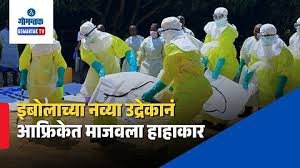


Ebola Outbreak in Africa: Indian Government on Alert; Screenings Intensified at Airports and Seaports
Ebola Virus Threat Rises in Africa; India on 'Alert Mode' with Health Machinery Fully Prepared
New Delhi/Pune: In light of a surge in Ebola virus cases across several African nations—including the Congo and Uganda—the Government of India has begun taking additional precautionary measures. The Ministry of Health has clarified that, currently, not a single case of Ebola has been detected in India, and the risk remains extremely low. Nevertheless, as a precautionary measure, screening protocols at airports and seaports have been significantly intensified.
The World Health Organization (WHO) has declared the Ebola outbreak in the Congo a Public Health Emergency of International Concern. This outbreak has now spread to Uganda. Against this backdrop, India's Ministry of Health, the NCDC, the ICMR, and other relevant agencies have conducted a comprehensive review of the situation.
Key Preparatory Measures by the Government:
Intensifying passenger screening at airports and seaports
Strengthening isolation and quarantine facilities
Ensuring full operational readiness of the NIV (National Institute of Virology) laboratory in Pune
Making preparations to activate other laboratories should the need arise
The Ministry of Health has appealed to the public not to panic over rumors regarding the virus and to refrain from spreading misinformation. The government asserts that the country's healthcare infrastructure remains fully alert and prepared to handle the situation.
Background of the Situation:
Reports indicate that hundreds of people have died in the Congo due to this outbreak. Laboratory tests have confirmed eight cases. It is reported that the outbreak is being driven by the Bundibugyo strain of the virus.
Important Note:
The India-Africa Forum Summit is scheduled to take place in Delhi from May 28 to May 31, followed by the International Big Cat Alliance Summit on June 1. Given that these summits are expected to see participation from various African nations, the government is exercising special vigilance. Conclusion:
Although there is currently no threat in India, the government remains vigilant at the highest level. Citizens are urged to rely on official information and refrain from panicking.
Ebola Virus Threat Rises in Africa; India on 'Alert Mode' with Health Machinery Fully Prepared
New Delhi/Pune: In light of a surge in Ebola virus cases across several African nations—including the Congo and Uganda—the Government of India has begun taking additional precautionary measures. The Ministry of Health has clarified that, currently, not a single case of Ebola has been detected in India, and the risk remains extremely low. Nevertheless, as a precautionary measure, screening protocols at airports and seaports have been significantly intensified.
The World Health Organization (WHO) has declared the Ebola outbreak in the Congo a Public Health Emergency of International Concern. This outbreak has now spread to Uganda. Against this backdrop, India's Ministry of Health, the NCDC, the ICMR, and other relevant agencies have conducted a comprehensive review of the situation.
Key Preparatory Measures by the Government:
Intensifying passenger screening at airports and seaports
Strengthening isolation and quarantine facilities
Ensuring full operational readiness of the NIV (National Institute of Virology) laboratory in Pune
Making preparations to activate other laboratories should the need arise
The Ministry of Health has appealed to the public not to panic over rumors regarding the virus and to refrain from spreading misinformation. The government asserts that the country's healthcare infrastructure remains fully alert and prepared to handle the situation.
Background of the Situation:
Reports indicate that hundreds of people have died in the Congo due to this outbreak. Laboratory tests have confirmed eight cases. It is reported that the outbreak is being driven by the Bundibugyo strain of the virus.
Important Note:
The India-Africa Forum Summit is scheduled to take place in Delhi from May 28 to May 31, followed by the International Big Cat Alliance Summit on June 1. Given that these summits are expected to see participation from various African nations, the government is exercising special vigilance. Conclusion:
Although there is currently no threat in India, the government remains vigilant at the highest level. Citizens are urged to rely on official information and refrain from panicking.
New Delhi/Pune: In light of a surge in Ebola virus cases across several African nations—including the Congo and Uganda—the Government of India has begun taking additional precautionary measures. The Ministry of Health has clarified that, currently, not a single case of Ebola has been detected in India, and the risk remains extremely low. Nevertheless, as a precautionary measure, screening protocols at airports and seaports have been significantly intensified.
The World Health Organization (WHO) has declared the Ebola outbreak in the Congo a Public Health Emergency of International Concern. This outbreak has now spread to Uganda. Against this backdrop, India's Ministry of Health, the NCDC, the ICMR, and other relevant agencies have conducted a comprehensive review of the situation.
Key Preparatory Measures by the Government:
Intensifying passenger screening at airports and seaports
Strengthening isolation and quarantine facilities
Ensuring full operational readiness of the NIV (National Institute of Virology) laboratory in Pune
Making preparations to activate other laboratories should the need arise
The Ministry of Health has appealed to the public not to panic over rumors regarding the virus and to refrain from spreading misinformation. The government asserts that the country's healthcare infrastructure remains fully alert and prepared to handle the situation.
Background of the Situation:
Reports indicate that hundreds of people have died in the Congo due to this outbreak. Laboratory tests have confirmed eight cases. It is reported that the outbreak is being driven by the Bundibugyo strain of the virus.
Important Note:
The India-Africa Forum Summit is scheduled to take place in Delhi from May 28 to May 31, followed by the International Big Cat Alliance Summit on June 1. Given that these summits are expected to see participation from various African nations, the government is exercising special vigilance. Conclusion:
Although there is currently no threat in India, the government remains vigilant at the highest level. Citizens are urged to rely on official information and refrain from panicking.