.jpg)


Police Authorized to Use Pellet Guns to Maintain Law and Order; Supreme Court’s Significant Observation During CJP Protest Hearing
Delhi: A political debate has arisen regarding the use of pellet guns by security forces during the CJP protest. In this context, the Supreme Court has made a crucial observation.
The Supreme Court clarified that the police have the authority to use pellet guns in extraordinary situations to maintain law and order.
A petition filed by former Central Information Commissioner and retired IPS officer Yashovardhan Azad, along with two victims, had demanded a complete nationwide ban on the use of pump-action guns or metal pellets for dispersing crowds. However, a bench comprising Chief Justice Surya Kant, Justice Joymalya Bagchi, and Justice V. Mohana—referencing the guidelines of the Bureau of Police Research and Development (BPRD)—clarified that the police are authorized to use these weapons in serious or extraordinary circumstances.
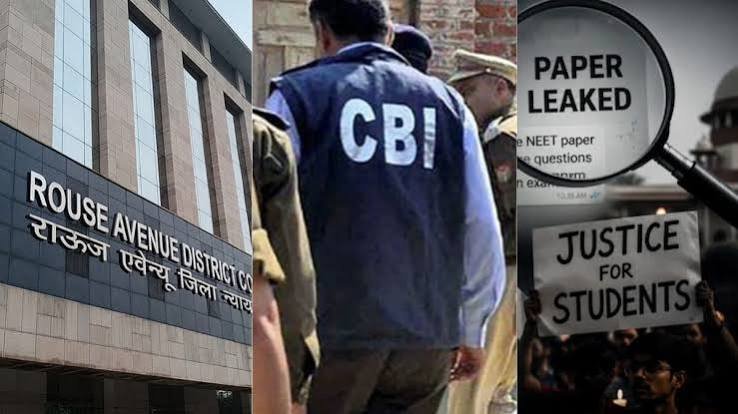
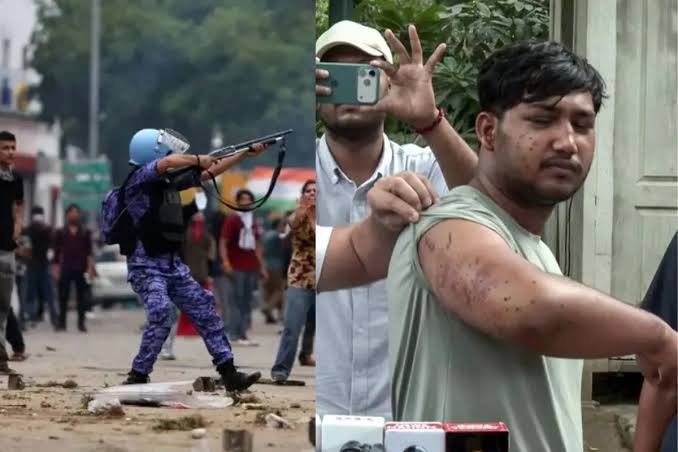
Furthermore, the Court directed the Delhi government to provide appropriate and free medical treatment to the protesting students injured by pellet guns during the CJP protest held on July 20. It also ordered the Central Government to preserve the complete record of ammunition used by the Rapid Action Force, which was deployed during the protest at Jantar Mantar against the NEET paper leak. The Supreme Court has also expressed its willingness to inquire into the use of pellet guns during the July 20 protest.
Delhi: A political debate has arisen regarding the use of pellet guns by security forces during the CJP protest. In this context, the Supreme Court has made a crucial observation.
The Supreme Court clarified that the police have the authority to use pellet guns in extraordinary situations to maintain law and order.
A petition filed by former Central Information Commissioner and retired IPS officer Yashovardhan Azad, along with two victims, had demanded a complete nationwide ban on the use of pump-action guns or metal pellets for dispersing crowds. However, a bench comprising Chief Justice Surya Kant, Justice Joymalya Bagchi, and Justice V. Mohana—referencing the guidelines of the Bureau of Police Research and Development (BPRD)—clarified that the police are authorized to use these weapons in serious or extraordinary circumstances.
Furthermore, the Court directed the Delhi government to provide appropriate and free medical treatment to the protesting students injured by pellet guns during the CJP protest held on July 20. It also ordered the Central Government to preserve the complete record of ammunition used by the Rapid Action Force, which was deployed during the protest at Jantar Mantar against the NEET paper leak. The Supreme Court has also expressed its willingness to inquire into the use of pellet guns during the July 20 protest.
The Supreme Court clarified that the police have the authority to use pellet guns in extraordinary situations to maintain law and order.
A petition filed by former Central Information Commissioner and retired IPS officer Yashovardhan Azad, along with two victims, had demanded a complete nationwide ban on the use of pump-action guns or metal pellets for dispersing crowds. However, a bench comprising Chief Justice Surya Kant, Justice Joymalya Bagchi, and Justice V. Mohana—referencing the guidelines of the Bureau of Police Research and Development (BPRD)—clarified that the police are authorized to use these weapons in serious or extraordinary circumstances.
Furthermore, the Court directed the Delhi government to provide appropriate and free medical treatment to the protesting students injured by pellet guns during the CJP protest held on July 20. It also ordered the Central Government to preserve the complete record of ammunition used by the Rapid Action Force, which was deployed during the protest at Jantar Mantar against the NEET paper leak. The Supreme Court has also expressed its willingness to inquire into the use of pellet guns during the July 20 protest.