.jpg)


**Educational System Needs a New Direction in View of Future Challenges – Devendra Fadnavis**
**Inauguration of the ‘Maharashtra Gyan Sabha-2026’ National Conference**
**Nagpur, Dec. 4** – The primary objective of the New Education Policy is to Indianize global knowledge and globalize Indian knowledge. We will not become great merely by making glorious references to historical events; rather, while keeping these in mind, we must also take into account the global challenges of the present and the future, and accordingly, steer our educational system in the right direction. This assertion was made today by Chief Minister Devendra Fadnavis.
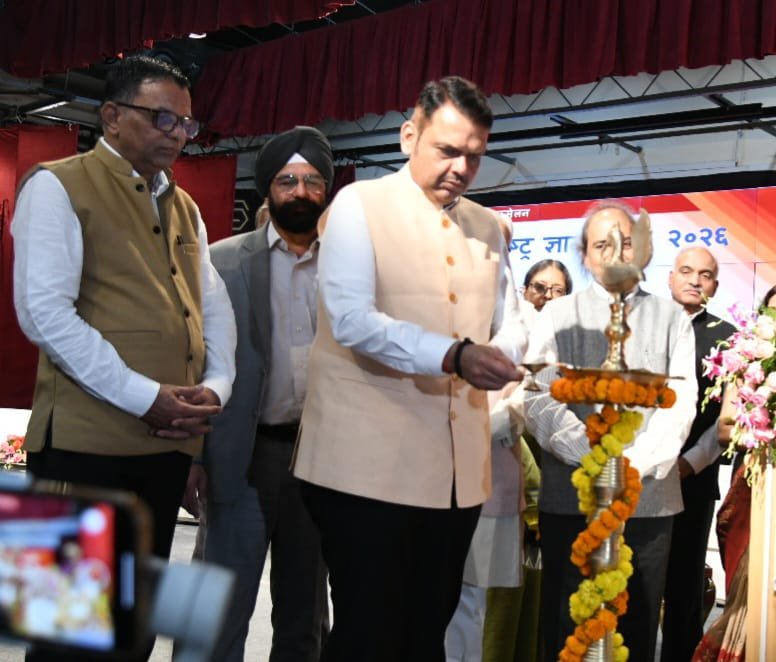
Chief Minister Devendra Fadnavis was speaking as the special guest at the inaugural session of the ‘Maharashtra Gyan Sabha-2026’ national conference, held at VNIT. The event was organized jointly by Rashtrasant Tukadoji Maharaj Nagpur University, Gondwana University, Visvesvaraya National Institute of Technology (VNIT), IIM Nagpur, and the Shiksha Sanskriti Utthan Nyas, New Delhi. Distinguished dignitaries present on this occasion included Atul Kothari (National Secretary, Shiksha Sanskriti Utthan Nyas), Dr. Prashant Narnaware (Secretary to the Governor), Bhimaraya Metri (Director, IIM Nagpur), Dr. Manali Kshirsagar (Vice-Chancellor, Rashtrasant Tukadoji Maharaj Nagpur University), Prashant Bokare (Vice-Chancellor, Gondwana University), Madabhushi Madan Gopal (Chairman, Board of Governors, VNIT), Dr. Premlal Patel (Director, VNIT), and Ravneet Khurana (Laghu Udyog Bharati).
Chief Minister Fadnavis remarked that the world is currently advancing at an extremely rapid pace. The first Industrial Revolution occurred in 1760. The subsequent three Industrial Revolutions spanned a period of approximately 250 years. However, within just the last fifteen years, the world has witnessed three Industrial Revolutions. If we fail to recognize and keep pace with this speed of change, we risk being left behind. Indians have made an invaluable contribution to the development of ‘AI’ (Artificial Intelligence) and ‘Deep Technology’—the very forces accelerating this revolution. Through our educational policy, we aim to cultivate human resources characterized by holistic individual development, alongside the inculcation of strong ethical and professional values. The expectation is that, endowed with intellectual, moral, and physical capabilities, such individuals will emerge as competent professionals who actively contribute to the nation's economy. Chief Minister Fadnavis drew attention to the objective of developing an educational system that harmonizes global knowledge with indigenous Indian knowledge traditions, while simultaneously equipping individuals to confront global challenges.
The Chief Minister stated that the nature of sixty percent of jobs is set to undergo a transformation within the next thousand days alone. Deep Tech and AI technologies are driving radical changes across all sectors. However, this does not imply that unemployment will rise significantly as a result. Similar discussions and apprehensions had arisen when the computer revolution first swept across the country; yet, we successfully left our indelible mark in that domain as well. Technology never stands still; therefore, it is imperative that we, too, advance alongside it. Universities and educators must critically evaluate which subjects remain relevant and appropriate in the current context. If three distinct industrial revolutions are projected to occur within a span of fifteen years, then nothing within society can remain static. Chief Minister Fadnavis urged everyone to embrace new methodologies, adapt the educational sector to suit these evolving needs, and ensure the continuous advancement of the flow of knowledge.
There was a time when we were apprehensive about the entry of foreign universities, primarily because we lacked the capacity to compete with them at that juncture. Today, however, that situation no longer prevails. We are currently developing an 'Edu-City' in Navi Mumbai, which will provide our students with the opportunity to access education from numerous foreign universities at an affordable cost. The Chief Minister further urged our domestic universities to step up to this competitive challenge and strive to attain those same high standards of educational excellence.
On this occasion, a commemorative souvenir was released at the hands of the Chief Minister and other dignitaries. Additionally, a booklet titled 'Best Practices of Gondwana University' was also released during the event. Dr. Manali Kshirsagar, Vice-Chancellor of Rashtrasant Tukadoji Maharaj Nagpur University, proposed the vote of thanks. Experts and representatives from the education and industry sectors across the country are participating in this two-day conference. This 'Maharashtra Gyan Sabha' is being organized based on the theme "Education for a Developed Maharashtra," set against the backdrop of the New Education Policy.
**Inauguration of the ‘Maharashtra Gyan Sabha-2026’ National Conference**
**Nagpur, Dec. 4** – The primary objective of the New Education Policy is to Indianize global knowledge and globalize Indian knowledge. We will not become great merely by making glorious references to historical events; rather, while keeping these in mind, we must also take into account the global challenges of the present and the future, and accordingly, steer our educational system in the right direction. This assertion was made today by Chief Minister Devendra Fadnavis.
Chief Minister Devendra Fadnavis was speaking as the special guest at the inaugural session of the ‘Maharashtra Gyan Sabha-2026’ national conference, held at VNIT. The event was organized jointly by Rashtrasant Tukadoji Maharaj Nagpur University, Gondwana University, Visvesvaraya National Institute of Technology (VNIT), IIM Nagpur, and the Shiksha Sanskriti Utthan Nyas, New Delhi. Distinguished dignitaries present on this occasion included Atul Kothari (National Secretary, Shiksha Sanskriti Utthan Nyas), Dr. Prashant Narnaware (Secretary to the Governor), Bhimaraya Metri (Director, IIM Nagpur), Dr. Manali Kshirsagar (Vice-Chancellor, Rashtrasant Tukadoji Maharaj Nagpur University), Prashant Bokare (Vice-Chancellor, Gondwana University), Madabhushi Madan Gopal (Chairman, Board of Governors, VNIT), Dr. Premlal Patel (Director, VNIT), and Ravneet Khurana (Laghu Udyog Bharati).
Chief Minister Fadnavis remarked that the world is currently advancing at an extremely rapid pace. The first Industrial Revolution occurred in 1760. The subsequent three Industrial Revolutions spanned a period of approximately 250 years. However, within just the last fifteen years, the world has witnessed three Industrial Revolutions. If we fail to recognize and keep pace with this speed of change, we risk being left behind. Indians have made an invaluable contribution to the development of ‘AI’ (Artificial Intelligence) and ‘Deep Technology’—the very forces accelerating this revolution. Through our educational policy, we aim to cultivate human resources characterized by holistic individual development, alongside the inculcation of strong ethical and professional values. The expectation is that, endowed with intellectual, moral, and physical capabilities, such individuals will emerge as competent professionals who actively contribute to the nation's economy. Chief Minister Fadnavis drew attention to the objective of developing an educational system that harmonizes global knowledge with indigenous Indian knowledge traditions, while simultaneously equipping individuals to confront global challenges.
The Chief Minister stated that the nature of sixty percent of jobs is set to undergo a transformation within the next thousand days alone. Deep Tech and AI technologies are driving radical changes across all sectors. However, this does not imply that unemployment will rise significantly as a result. Similar discussions and apprehensions had arisen when the computer revolution first swept across the country; yet, we successfully left our indelible mark in that domain as well. Technology never stands still; therefore, it is imperative that we, too, advance alongside it. Universities and educators must critically evaluate which subjects remain relevant and appropriate in the current context. If three distinct industrial revolutions are projected to occur within a span of fifteen years, then nothing within society can remain static. Chief Minister Fadnavis urged everyone to embrace new methodologies, adapt the educational sector to suit these evolving needs, and ensure the continuous advancement of the flow of knowledge.
There was a time when we were apprehensive about the entry of foreign universities, primarily because we lacked the capacity to compete with them at that juncture. Today, however, that situation no longer prevails. We are currently developing an 'Edu-City' in Navi Mumbai, which will provide our students with the opportunity to access education from numerous foreign universities at an affordable cost. The Chief Minister further urged our domestic universities to step up to this competitive challenge and strive to attain those same high standards of educational excellence.
On this occasion, a commemorative souvenir was released at the hands of the Chief Minister and other dignitaries. Additionally, a booklet titled 'Best Practices of Gondwana University' was also released during the event. Dr. Manali Kshirsagar, Vice-Chancellor of Rashtrasant Tukadoji Maharaj Nagpur University, proposed the vote of thanks. Experts and representatives from the education and industry sectors across the country are participating in this two-day conference. This 'Maharashtra Gyan Sabha' is being organized based on the theme "Education for a Developed Maharashtra," set against the backdrop of the New Education Policy.
**Nagpur, Dec. 4** – The primary objective of the New Education Policy is to Indianize global knowledge and globalize Indian knowledge. We will not become great merely by making glorious references to historical events; rather, while keeping these in mind, we must also take into account the global challenges of the present and the future, and accordingly, steer our educational system in the right direction. This assertion was made today by Chief Minister Devendra Fadnavis.
Chief Minister Devendra Fadnavis was speaking as the special guest at the inaugural session of the ‘Maharashtra Gyan Sabha-2026’ national conference, held at VNIT. The event was organized jointly by Rashtrasant Tukadoji Maharaj Nagpur University, Gondwana University, Visvesvaraya National Institute of Technology (VNIT), IIM Nagpur, and the Shiksha Sanskriti Utthan Nyas, New Delhi. Distinguished dignitaries present on this occasion included Atul Kothari (National Secretary, Shiksha Sanskriti Utthan Nyas), Dr. Prashant Narnaware (Secretary to the Governor), Bhimaraya Metri (Director, IIM Nagpur), Dr. Manali Kshirsagar (Vice-Chancellor, Rashtrasant Tukadoji Maharaj Nagpur University), Prashant Bokare (Vice-Chancellor, Gondwana University), Madabhushi Madan Gopal (Chairman, Board of Governors, VNIT), Dr. Premlal Patel (Director, VNIT), and Ravneet Khurana (Laghu Udyog Bharati).
Chief Minister Fadnavis remarked that the world is currently advancing at an extremely rapid pace. The first Industrial Revolution occurred in 1760. The subsequent three Industrial Revolutions spanned a period of approximately 250 years. However, within just the last fifteen years, the world has witnessed three Industrial Revolutions. If we fail to recognize and keep pace with this speed of change, we risk being left behind. Indians have made an invaluable contribution to the development of ‘AI’ (Artificial Intelligence) and ‘Deep Technology’—the very forces accelerating this revolution. Through our educational policy, we aim to cultivate human resources characterized by holistic individual development, alongside the inculcation of strong ethical and professional values. The expectation is that, endowed with intellectual, moral, and physical capabilities, such individuals will emerge as competent professionals who actively contribute to the nation's economy. Chief Minister Fadnavis drew attention to the objective of developing an educational system that harmonizes global knowledge with indigenous Indian knowledge traditions, while simultaneously equipping individuals to confront global challenges.
The Chief Minister stated that the nature of sixty percent of jobs is set to undergo a transformation within the next thousand days alone. Deep Tech and AI technologies are driving radical changes across all sectors. However, this does not imply that unemployment will rise significantly as a result. Similar discussions and apprehensions had arisen when the computer revolution first swept across the country; yet, we successfully left our indelible mark in that domain as well. Technology never stands still; therefore, it is imperative that we, too, advance alongside it. Universities and educators must critically evaluate which subjects remain relevant and appropriate in the current context. If three distinct industrial revolutions are projected to occur within a span of fifteen years, then nothing within society can remain static. Chief Minister Fadnavis urged everyone to embrace new methodologies, adapt the educational sector to suit these evolving needs, and ensure the continuous advancement of the flow of knowledge.
There was a time when we were apprehensive about the entry of foreign universities, primarily because we lacked the capacity to compete with them at that juncture. Today, however, that situation no longer prevails. We are currently developing an 'Edu-City' in Navi Mumbai, which will provide our students with the opportunity to access education from numerous foreign universities at an affordable cost. The Chief Minister further urged our domestic universities to step up to this competitive challenge and strive to attain those same high standards of educational excellence.
On this occasion, a commemorative souvenir was released at the hands of the Chief Minister and other dignitaries. Additionally, a booklet titled 'Best Practices of Gondwana University' was also released during the event. Dr. Manali Kshirsagar, Vice-Chancellor of Rashtrasant Tukadoji Maharaj Nagpur University, proposed the vote of thanks. Experts and representatives from the education and industry sectors across the country are participating in this two-day conference. This 'Maharashtra Gyan Sabha' is being organized based on the theme "Education for a Developed Maharashtra," set against the backdrop of the New Education Policy.