.jpg)
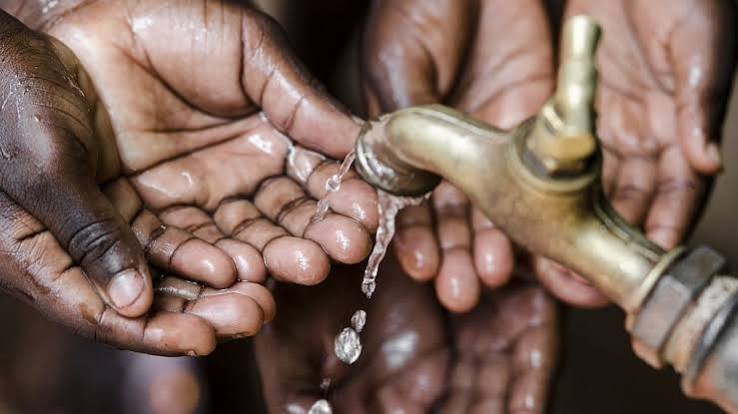


District Collector Inspects Vena Water Supply Scheme to Mitigate Potential Water Scarcity Focus on Water Supply, Quality, and Purification
Nagpur, 7th: District Collector Kumar Ashirwad has directed the concerned authorities to remain highly vigilant and ensure the timely completion of tasks to provide clean and regular water supply to citizens in both urban and rural areas. In light of potential drought conditions and water scarcity, Collector Ashirwad visited the Wadi Municipal Council’s water supply scheme today to conduct an on-site inspection of the entire system.
Present during the inspection were Wadi Municipal Council President Naresh Charde, Maharashtra Jeevan Pradhikaran (MJP) Superintending Engineer (Mechanical) Mr. Bahadure, Executive Engineer Vidya Kanade, Sub-Divisional Engineer Mr. Naghate, Sub-Divisional Engineer (Mechanical) Mr. Battulwar, Wadi Municipal Council Chief Officer Vinod Jadhav, and engineers associated with the project.
The Collector inspected the Vena Dam and the water purification plant, gathering detailed information about the facility. Through the Maharashtra Jeevan Pradhikaran, water from this dam is supplied to Wadi, Deolameti, and the Ordnance Factory, Ambazhari. The area has a population exceeding 100,000, with a daily water demand of 23.68 million liters. Currently, the Vena project holds 56.42% of its water storage capacity; for comparison, the storage level was 99.88% in November 2025—a significant decrease compared to the previous year. Collector Ashirwad held detailed discussions with the concerned officials regarding measures to address this situation.
According to a report from the Maharashtra Pollution Control Board, MJP engineers noted that it is essential to control the levels of iron, ammonia, and organic matter (Biochemical Oxygen Demand—BOD) in the water sourced from the Vena Dam. If the water level in the dam drops, the concentration of certain impurities may increase, making it difficult to purify the water using conventional methods. This could lead to concerns regarding both the availability and the quality of the water. The District Collector emphasized the need for concrete measures and stated that all possible options would be explored to address this issue.
District Collector Shri Ashirwad reviewed the local water purification process and issued instructions for regular water quality testing throughout the distribution system. The Sub-Divisional Engineer explained that in the event of a decline in water storage, contaminated water from the reservoir could be treated using a combination of ozone, nanobubble technology, and a foam fractionator (ozofractionation). The District Collector noted that it is technically feasible to effectively purify water at this facility, which is a positive development.
Directive to Submit a Proposal for Water Purification Immediately
If the water level in the Vena Dam drops this year, it will become necessary to source water from Ambazari; the same purification method can be applied to the contaminated water from Ambazari. This system would serve as a permanent solution for water sourced from both Vena and Ambazari, ensuring that citizens have access to clean drinking water. Consequently, the District Collector directed that a proposal for implementing this modern purification approach—utilizing ozone, nanobubble technology, and a foam fractionator—be submitted to the District Collector’s office immediately.
Inspection of the Water Purification Plant and Specific Instructions on Water Quality
During his visit to the Wadi Water Purification Plant, the District Collector reviewed the operational procedures, plant capacity, water quality, maintenance and repair protocols, and the distribution system for the purified water. Stating that it is the primary responsibility of the administration to ensure that citizens have access to clean, safe, and high-quality drinking water, the District Collector issued directives for the regular cleaning and necessary maintenance of water purification plants, consistent testing of water quality, and effective oversight of the purification process. During the review, the Collector assessed the current status of available water sources, storage capacities, water extraction, purification processes, distribution networks, instances of water leakage, and the availability of alternative water sources. He provided key instructions focused on curbing water leakage, reviving traditional or old water sources, and promoting water conservation.
By conducting a comprehensive review—covering everything from the primary water sources and purification systems to distribution networks and alternative water sources—the Collector emphasized the importance of the administration’s proactive preparations to address any potential water scarcity crisis.