.jpg)


Government Committed to Progress in the Agricultural Sector - Kumar Ashirwad
- Special Seminar Held at Hotel Centre Point
Nagpur, 17th: Significant growth in farmers' economic returns remains elusive unless modern technology is increasingly adopted in agriculture and the supply chain—connecting farmers directly to consumers—is strengthened. District Collector Kumar Ashirwad expressed confidence that if the experience of seasoned farmers—who have matured while facing the challenges of climate change—is combined with advanced agricultural technology, farmers in Nagpur district will pave a new path toward profitable farming.
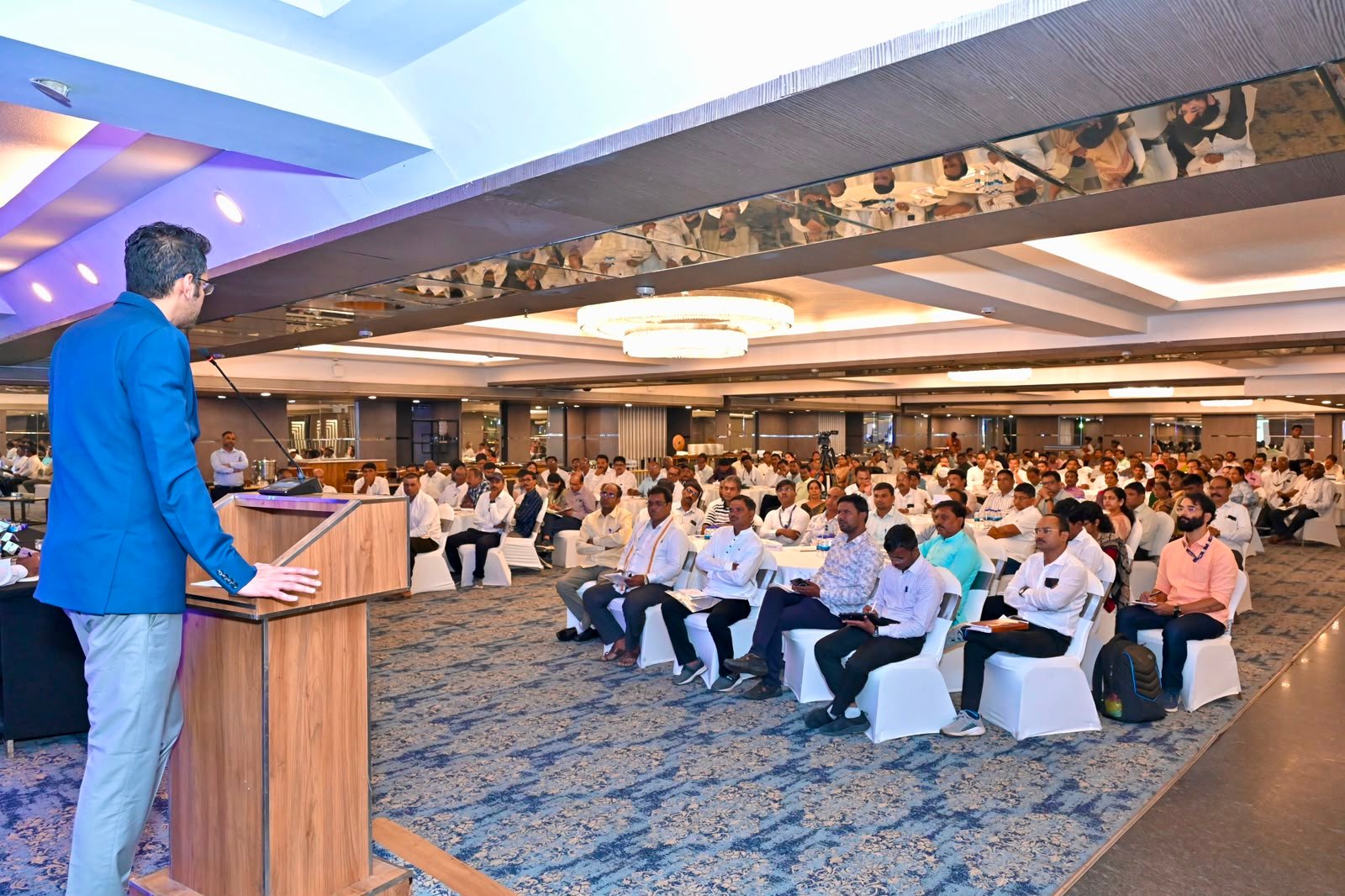
He was speaking at a seminar organized at Hotel Centre Point, aimed at facilitating an exchange of experiences among farmers who have implemented progressive agricultural practices and enabling the government to integrate comprehensive development planning for the district's agricultural sector. Present at the event were Dr. Archana Kadu (Project Director, ATMA), Ravindra Manohare (District Superintending Agriculture Officer), Mrs. Pallavi Talmale (Deputy Director), and other senior officials. More than 130 progressive farmers, women farmers, and directors of Farmer Producer Companies from across the district participated in the program.
Major crops cultivated in Nagpur district include paddy, soybean, tur (pigeon pea), cotton, oranges, and other fruits. Farmers frequently encounter various challenges regarding these crops, such as the scope for changing cropping patterns (including intercropping), managing pests and diseases amidst climate change, modern production technology and planning, Farmer Producer Companies, organic farming, agribusiness ventures involving women's self-help groups, and the availability of manpower. District Collector Kumar Ashirwad stated that the administration is striving to strike a balance between implementing various government schemes and the selection and management of eligible beneficiaries. He mentioned that efforts would be made to fund innovative ideas—implemented on a pilot basis—through the District Annual Planning Scheme.
Discussions during the seminar also focused on providing increased subsidies for technologies such as laser and smart systems to protect crops near forest areas, user-friendly pruning machines for orchards, orange grading and packaging centers, leaf testing laboratories, boom sprayers, and automation for drip irrigation systems. Furthermore, deliberations were held regarding the provision of battery-operated power tillers, solar dryers, modern harvesters for crops like chia seeds and mustard, DSR (Direct Seeded Rice) machines and paddy transplanters, BBF (Broad Bed Furrow) and seed treatment machinery for soybean, and cotton graders for the cotton crop.
- Special Seminar Held at Hotel Centre Point
Nagpur, 17th: Significant growth in farmers' economic returns remains elusive unless modern technology is increasingly adopted in agriculture and the supply chain—connecting farmers directly to consumers—is strengthened. District Collector Kumar Ashirwad expressed confidence that if the experience of seasoned farmers—who have matured while facing the challenges of climate change—is combined with advanced agricultural technology, farmers in Nagpur district will pave a new path toward profitable farming.
He was speaking at a seminar organized at Hotel Centre Point, aimed at facilitating an exchange of experiences among farmers who have implemented progressive agricultural practices and enabling the government to integrate comprehensive development planning for the district's agricultural sector. Present at the event were Dr. Archana Kadu (Project Director, ATMA), Ravindra Manohare (District Superintending Agriculture Officer), Mrs. Pallavi Talmale (Deputy Director), and other senior officials. More than 130 progressive farmers, women farmers, and directors of Farmer Producer Companies from across the district participated in the program.
Major crops cultivated in Nagpur district include paddy, soybean, tur (pigeon pea), cotton, oranges, and other fruits. Farmers frequently encounter various challenges regarding these crops, such as the scope for changing cropping patterns (including intercropping), managing pests and diseases amidst climate change, modern production technology and planning, Farmer Producer Companies, organic farming, agribusiness ventures involving women's self-help groups, and the availability of manpower. District Collector Kumar Ashirwad stated that the administration is striving to strike a balance between implementing various government schemes and the selection and management of eligible beneficiaries. He mentioned that efforts would be made to fund innovative ideas—implemented on a pilot basis—through the District Annual Planning Scheme.
Discussions during the seminar also focused on providing increased subsidies for technologies such as laser and smart systems to protect crops near forest areas, user-friendly pruning machines for orchards, orange grading and packaging centers, leaf testing laboratories, boom sprayers, and automation for drip irrigation systems. Furthermore, deliberations were held regarding the provision of battery-operated power tillers, solar dryers, modern harvesters for crops like chia seeds and mustard, DSR (Direct Seeded Rice) machines and paddy transplanters, BBF (Broad Bed Furrow) and seed treatment machinery for soybean, and cotton graders for the cotton crop.
Nagpur, 17th: Significant growth in farmers' economic returns remains elusive unless modern technology is increasingly adopted in agriculture and the supply chain—connecting farmers directly to consumers—is strengthened. District Collector Kumar Ashirwad expressed confidence that if the experience of seasoned farmers—who have matured while facing the challenges of climate change—is combined with advanced agricultural technology, farmers in Nagpur district will pave a new path toward profitable farming.
He was speaking at a seminar organized at Hotel Centre Point, aimed at facilitating an exchange of experiences among farmers who have implemented progressive agricultural practices and enabling the government to integrate comprehensive development planning for the district's agricultural sector. Present at the event were Dr. Archana Kadu (Project Director, ATMA), Ravindra Manohare (District Superintending Agriculture Officer), Mrs. Pallavi Talmale (Deputy Director), and other senior officials. More than 130 progressive farmers, women farmers, and directors of Farmer Producer Companies from across the district participated in the program.
Major crops cultivated in Nagpur district include paddy, soybean, tur (pigeon pea), cotton, oranges, and other fruits. Farmers frequently encounter various challenges regarding these crops, such as the scope for changing cropping patterns (including intercropping), managing pests and diseases amidst climate change, modern production technology and planning, Farmer Producer Companies, organic farming, agribusiness ventures involving women's self-help groups, and the availability of manpower. District Collector Kumar Ashirwad stated that the administration is striving to strike a balance between implementing various government schemes and the selection and management of eligible beneficiaries. He mentioned that efforts would be made to fund innovative ideas—implemented on a pilot basis—through the District Annual Planning Scheme.
Discussions during the seminar also focused on providing increased subsidies for technologies such as laser and smart systems to protect crops near forest areas, user-friendly pruning machines for orchards, orange grading and packaging centers, leaf testing laboratories, boom sprayers, and automation for drip irrigation systems. Furthermore, deliberations were held regarding the provision of battery-operated power tillers, solar dryers, modern harvesters for crops like chia seeds and mustard, DSR (Direct Seeded Rice) machines and paddy transplanters, BBF (Broad Bed Furrow) and seed treatment machinery for soybean, and cotton graders for the cotton crop.