.jpg)


Marathi Declared a Classical Language—Yet 94,000 Students Fail! When Will the Shadow Over Our Mother Tongue Lift?
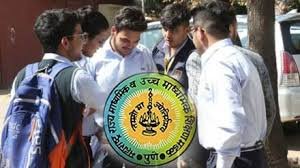
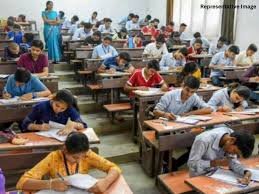
Mumbai, May 11, 2026:Even as the cultural pride surrounding Marathi’s attainment of 'Classical Language' status is being celebrated, this year's 10th-grade results have brought to light a disturbing reality. Regrettable statistics have emerged revealing that a staggering 94,000 students in Maharashtra have failed the Marathi subject. This is not merely an examination statistic; it serves as an alarming wake-up call regarding the future of the Marathi language.
Against the backdrop of Marathi-medium schools facing a decline—a trend that has sparked movements gaining momentum in urban areas—the results have exposed yet another shocking fact. The pass rate for students who opted for Marathi as their *first* language has turned out to be even lower than that of students in English-medium schools. The situation is even more critical for those students who chose Marathi as a *second* or *third* language.
Key Issues:
In many households, children are being deliberately encouraged to speak in English.
Speaking Marathi is often perceived as a sign of 'backwardness,' while speaking English is equated with 'smartness.'
English-medium schools have become symbols of social prestige, whereas Marathi-medium schools are struggling to maintain their student enrollment numbers.
The usage of Marathi is diminishing due to the influence of social media and English-language digital content.
Traditional and monotonous teaching methodologies fail to foster an emotional connection between students and the language.
While attaining the status of a Classical Language is undoubtedly a matter of pride, a clear consensus is emerging: if thousands of students within the state are failing in that very language, then this pride remains nothing more than an illusion.
What is the Solution?
To ensure the survival of Marathi, mere political rhetoric and protest movements are insufficient. It is imperative to increase its practical application, create rich Marathi content across digital platforms, introduce modern pedagogical methods, enrich children's literature, and actively encourage the use of Marathi within the home itself. Learning English is essential, but doing so does not necessitate abandoning Marathi. It has been globally proven that a strong command over one's mother tongue enhances cognitive abilities and critical thinking skills. The prevailing sentiment is that the shadow looming over the mother tongue can be dispelled only if immediate efforts are undertaken at all levels, drawing lessons from this outcome. Otherwise, while Marathi will continue to be extolled on public platforms, its hold on the minds of the new generation will gradually slip away.
Mumbai, May 11, 2026:Even as the cultural pride surrounding Marathi’s attainment of 'Classical Language' status is being celebrated, this year's 10th-grade results have brought to light a disturbing reality. Regrettable statistics have emerged revealing that a staggering 94,000 students in Maharashtra have failed the Marathi subject. This is not merely an examination statistic; it serves as an alarming wake-up call regarding the future of the Marathi language.
Against the backdrop of Marathi-medium schools facing a decline—a trend that has sparked movements gaining momentum in urban areas—the results have exposed yet another shocking fact. The pass rate for students who opted for Marathi as their *first* language has turned out to be even lower than that of students in English-medium schools. The situation is even more critical for those students who chose Marathi as a *second* or *third* language.
Key Issues:
In many households, children are being deliberately encouraged to speak in English.
Speaking Marathi is often perceived as a sign of 'backwardness,' while speaking English is equated with 'smartness.'
English-medium schools have become symbols of social prestige, whereas Marathi-medium schools are struggling to maintain their student enrollment numbers.
The usage of Marathi is diminishing due to the influence of social media and English-language digital content.
Traditional and monotonous teaching methodologies fail to foster an emotional connection between students and the language.
While attaining the status of a Classical Language is undoubtedly a matter of pride, a clear consensus is emerging: if thousands of students within the state are failing in that very language, then this pride remains nothing more than an illusion.
What is the Solution?
To ensure the survival of Marathi, mere political rhetoric and protest movements are insufficient. It is imperative to increase its practical application, create rich Marathi content across digital platforms, introduce modern pedagogical methods, enrich children's literature, and actively encourage the use of Marathi within the home itself. Learning English is essential, but doing so does not necessitate abandoning Marathi. It has been globally proven that a strong command over one's mother tongue enhances cognitive abilities and critical thinking skills. The prevailing sentiment is that the shadow looming over the mother tongue can be dispelled only if immediate efforts are undertaken at all levels, drawing lessons from this outcome. Otherwise, while Marathi will continue to be extolled on public platforms, its hold on the minds of the new generation will gradually slip away.
Against the backdrop of Marathi-medium schools facing a decline—a trend that has sparked movements gaining momentum in urban areas—the results have exposed yet another shocking fact. The pass rate for students who opted for Marathi as their *first* language has turned out to be even lower than that of students in English-medium schools. The situation is even more critical for those students who chose Marathi as a *second* or *third* language.
Key Issues:
In many households, children are being deliberately encouraged to speak in English.
Speaking Marathi is often perceived as a sign of 'backwardness,' while speaking English is equated with 'smartness.'
English-medium schools have become symbols of social prestige, whereas Marathi-medium schools are struggling to maintain their student enrollment numbers.
The usage of Marathi is diminishing due to the influence of social media and English-language digital content.
Traditional and monotonous teaching methodologies fail to foster an emotional connection between students and the language.
While attaining the status of a Classical Language is undoubtedly a matter of pride, a clear consensus is emerging: if thousands of students within the state are failing in that very language, then this pride remains nothing more than an illusion.
What is the Solution?
To ensure the survival of Marathi, mere political rhetoric and protest movements are insufficient. It is imperative to increase its practical application, create rich Marathi content across digital platforms, introduce modern pedagogical methods, enrich children's literature, and actively encourage the use of Marathi within the home itself. Learning English is essential, but doing so does not necessitate abandoning Marathi. It has been globally proven that a strong command over one's mother tongue enhances cognitive abilities and critical thinking skills. The prevailing sentiment is that the shadow looming over the mother tongue can be dispelled only if immediate efforts are undertaken at all levels, drawing lessons from this outcome. Otherwise, while Marathi will continue to be extolled on public platforms, its hold on the minds of the new generation will gradually slip away.